
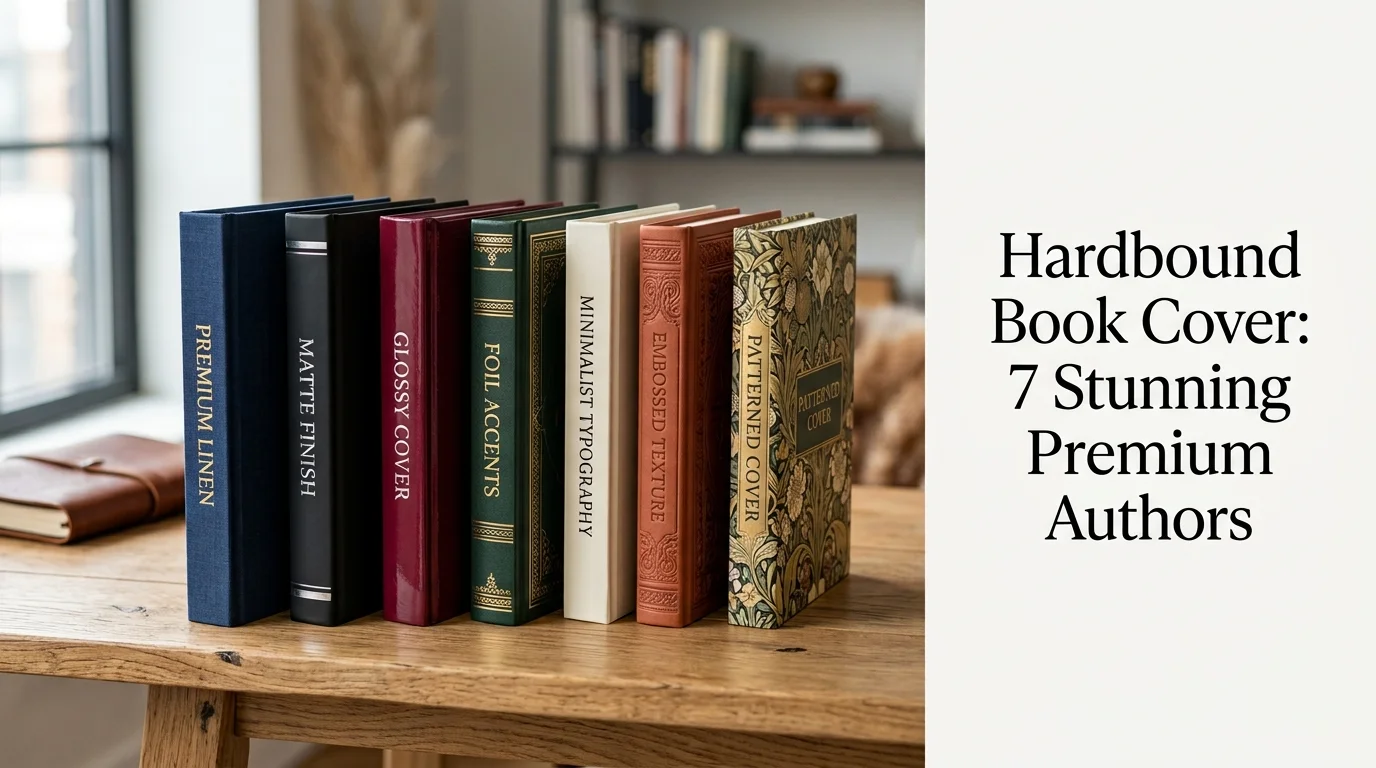
Hardbound Book Cover: 7 Stunning Premium Options for Authors
Choosing the right cover is an important step for every author. Your cover protects the pages and shapes the first impression. A hardbound book cover can give your book a strong appearance. It can also make the finished book feel more valuable. Many readers enjoy the solid feel of a hardcover book. Authors also choose this format for special editions. It works well for novels, memoirs, journals, and photo books.
It can also suit children’s books and family history books. However, choosing the right cover requires more than picking a hard material. You also need to consider the design, material, binding, and printing process. A good cover should match your book’s purpose and audience. It should also fit your budget and production needs. In this guide, we will explore premium options in detail. We will also explain hardcover binding in simple language. By the end, you will understand the main choices available.
What Is a Hardbound Book Cover?
A hardbound book cover is a rigid cover built around a book block. The book block contains the printed pages of your publication. Strong boards are normally used to create the rigid cover. These boards are then covered with another material. The material can be printed paper, cloth, linen, or another option. The cover can also include printed artwork or decorative details. Some books use foil lettering for a more premium appearance. Others use simple printed designs across the entire cover. The final construction depends on the printer and binding method.
Hardbound books are also commonly called hardcover books. The term hardback book cover is also widely used. These names usually describe a similar physical format. The main difference is the way people use the terms. Some publishers prefer hardcover, while others use hardback. Authors should focus more on construction and quality. The exact name matters less than the finished result.
A hardcover format can provide extra protection during normal handling. The rigid boards help protect the pages from bending easily. This can be useful for books that readers handle often. It can also make the book feel more substantial. However, not every hardcover needs to look expensive. A simple cover can still look professional and attractive. Good design often matters as much as expensive materials.
The title should remain easy to read from a distance. Images should also look clear and properly positioned. The spine needs special attention during the design stage. Its width depends on the number of pages and materials. A printer can provide the correct measurements before production. Following those measurements helps avoid many common printing problems.
1. Printed Paper Hardbound Book Cover
A printed paper hardbound book cover offers plenty of design freedom. You can use photos, illustrations, colors, and typography. It works well for novels, children’s books, and nonfiction. The front, spine, and back can share one consistent design. Matte finishing gives a soft, modern look.
Gloss finishing makes colors appear brighter. Always request samples before choosing a finish. Also, use your printer’s cover template. Check the bleed, safe area, and spine measurements carefully.
2. Cloth Hardbound Book Cover
Cloth is a popular choice for premium hardcover books. It gives the book a classic and elegant appearance. The textured surface also creates a unique reading experience. Cloth works well for memoirs, journals, and special editions. You can choose from different colors and add foil lettering.
Gold and silver foil are common choices. Always request a physical sample before ordering. This helps you check the actual color and texture.
3. Foil-Stamped Hardcover Binding
Foil stamping adds an elegant detail to hardcover binding. It is often used for titles and decorative elements. Gold and silver are popular foil choices. Dark covers can create strong contrast with metallic foil. Keep the design simple for a cleaner appearance.
Ask your printer about available foil colors and methods. A proof can help you check the final placement. This is especially useful for premium or special editions.
4. Printed Hardback Book Cover
A printed hardback book cover allows artwork across the entire cover. It works well for colorful and highly visual books. The title should remain clear and easy to read. Keep spine text suitable for the available space. The back cover can include descriptions, reviews, and author details. Leave enough space for the barcode when needed. Always follow your printer’s template. Accurate measurements can prevent costly printing problems.
5. Linen-Style Hardcover Cover
Linen-style material offers a textured alternative to standard covers. It can create a soft and elegant visual impression. This option is often used for premium books and keepsakes. It can also work well for journals and memoirs. Family history books may benefit from this classic appearance. The texture adds interest without requiring heavy decoration. A simple title can look impressive on a linen surface. You can also combine linen with foil lettering.
Linen-style covers are especially suitable for minimal designs. A small title can provide enough visual information. You may not need large photographs or illustrations. The material itself becomes part of the cover experience. This can create a more sophisticated presentation. However, the final result depends on material quality. Different linen products can have different textures and colors. Always ask your printer about the available samples. A physical sample can help you choose with confidence.
When designing a linen cover, consider text placement carefully. The title needs enough contrast against the material. Foil or printed lettering can provide this contrast. The author name should remain readable as well. Avoid adding too many small details to the surface. Fine details may not appear exactly as expected. A clean design often works better with textured materials. Good spacing can also make the cover feel more premium.
Understanding Hardcover Binding

Hardcover binding involves several parts working together. The rigid boards provide structure around the book block. The covering material creates the visible outer surface. The binding process connects the pages with the finished cover. Different bookbinding methods can produce different results. Some books use sewn sections for stronger construction. Others use adhesive methods during production. The correct method depends on the book and printer.
Page count can affect the binding process considerably. A very thick book requires careful spine planning. The cover must fit the thickness of the book block. Paper weight can also change the final thickness. This is why printers ask for complete book specifications. They need those details before creating accurate templates. Giving incorrect information can lead to cover problems. Always confirm the final page count before production.
Authors should also think about how readers will use the book. A frequently handled reference book may need stronger construction. A decorative book may focus more on appearance. A children’s book may need additional durability. A collector edition may focus on materials and finishing. These different goals can require different binding choices. There is no single approach for every publication. Your book’s purpose should guide the final decision.
DIY Hardcover Binding
DIY hardcover binding can be an interesting project for beginners. It allows you to learn how books are physically constructed. You can practice using inexpensive materials first. This helps you understand boards, covers, glue, and alignment. You can also learn how different materials behave. However, handmade binding requires patience and careful measurements. Small errors can become visible after the book is assembled.
Basic projects usually require bookbinding boards and covering material. You may also need suitable adhesive and cutting tools. A ruler helps you make accurate measurements. A bone folder can help create clean folds. Weights can keep glued sections flat while they dry. You should work on a clean and level surface. Keeping your tools organized can also improve the process.
DIY projects are excellent for personal books and practice. They can also help new authors understand book construction. However, commercial publishing requires consistent results. Producing many identical books can be difficult at home. Professional printers have specialized equipment for this purpose. They can also handle large production quantities more efficiently. For a published book, professional hardcover binding may be more practical.
How to Make a Hard Cover Book
Learning how to make a hard cover book begins with planning. First, decide the final size of your book. Then confirm the number of pages in the book block. You should also decide which covering material you want. These choices affect the final cover dimensions. The book’s thickness also affects the spine measurement. Taking accurate measurements is one of the most important steps.
Next, prepare the boards according to your chosen size. The boards should have clean and straight edges. You then prepare the material that will cover the boards. This could be paper, cloth, or another suitable material. Apply the material carefully to avoid wrinkles. Keep the corners neat during the folding process. Allow enough time for the adhesive to dry properly.
The book block must then connect with the finished cover. This step requires accurate alignment and suitable adhesive. The pages should sit correctly inside the cover. The spine should also remain properly positioned. Avoid opening the book aggressively while the adhesive sets. Give the finished book enough drying time. Rushing the process can damage the cover or pages.
If you are new to bookbinding, start with a practice project. Use inexpensive paper and basic covering materials. This lets you learn without risking your final publication. Once you understand the process, you can try better materials. Professional publishing still requires careful production standards. Always follow your printer’s specifications when producing commercial books.
Hard Cover Book Binding vs. Paperback

Hard cover book binding and paperback binding serve different purposes. A hardcover uses rigid boards around the book block. A paperback normally uses a flexible cover instead. This creates different experiences for readers. Hardcover books generally feel more substantial in the hand. Paperback books are usually lighter and easier to carry.
Cost can also influence the choice between both formats. Hardcover production often requires more materials and processing. This can increase the final manufacturing cost. Paperback production can provide a simpler physical format. However, actual costs depend on many production details. Quantity, paper type, size, and finishing can all matter.
Authors should consider their target audience carefully. Some readers prefer lightweight books for everyday reading. Others appreciate the stronger feel of a hardcover. Your book’s purpose should guide the format decision. A premium edition may suit hardcover production. A budget-focused edition may use paperback binding. You can also publish both formats when appropriate.
Hard Covers for Book Binding
There are many hard covers for book binding available today. Each material can create a different appearance and feel. Printed paper provides plenty of design freedom. Cloth creates a classic and textured appearance. Linen-style material offers another refined option. Custom materials can provide even more creative possibilities.
Your choice should begin with the purpose of the book. A children’s book may need a durable surface. A memoir may suit a simple cloth cover. A photography book may benefit from printed artwork. A collector edition may use several premium finishing techniques. The cover should support the book rather than distract from it.
Budget is another important consideration for authors. Premium materials can increase production expenses. Foil, embossing, and custom finishes can add more costs. Ask your printer for a detailed quotation. Make sure the quote includes all finishing charges. Comparing complete quotes can make the decision easier.
Choosing the Right Hardback Book Cover
Choosing a hardback book cover should start with your reader. Think about how the book will be used. Consider whether readers will carry it frequently. Also consider whether the book is meant as a gift. These details can influence the material and binding choice.
Your cover design should also match your book’s subject. A serious memoir may need a restrained design. A children’s book may need bright and playful artwork. A business book may benefit from a clean presentation. A family history book may suit a classic material. Matching the cover with the content creates a more unified product.
Always request samples before making a major production decision. Samples show the actual material and finishing quality. They can also reveal texture and color differences. Digital previews cannot always show these details accurately. A physical sample gives you a better reference. It can also help you discuss changes with your printer.
A final proof is another important step before production. Check the front cover, spine, and back cover carefully. Review every title and author name for accuracy. Check images and colors before approving the final file. Make sure the barcode area is correctly positioned. Careful checking can prevent expensive production mistakes.
Premium Finishing Options for Hardcover Books

Premium finishing can make a simple hardcover look more special. Foil stamping is one popular choice for hardcover books. It can highlight your title, author name, or small design elements. Gold and silver are common options, but other colors may be available. Embossing can also add a raised effect to selected areas. These details work well with cloth and printed covers.
Keep your finishing simple for a cleaner appearance. Too many effects can make your cover look crowded. A simple title with foil can look very elegant. Always ask your printer about available finishing options. Request samples before choosing an expensive finish.
How Cover Material Affects Your Book
Cover material affects both appearance and the reading experience. Printed paper allows colorful artwork and detailed designs. Cloth gives the book a classic and textured appearance. Linen-style material can create a soft premium look. Each material works better for different types of books.
Think about how readers will use your book. Children’s books may need stronger construction. Memoirs may look better with simple cloth covers. Photography books can benefit from printed artwork. Your audience and book purpose should guide your decision.
Hardcover Binding for Different Books
Different books can require different binding choices. Novels often use simple and attractive hardcover designs. Children’s books may need extra durability. Photo books usually focus on strong visual presentation. Family history books can work well with traditional materials.
Page count also affects hardcover binding. A thicker book needs accurate spine measurements. Paper weight can change the final book thickness. Always provide your printer with accurate specifications. This helps them create the correct cover template.
How to Prepare a Hardcover Cover File

Your printer should provide a cover template before printing. The template normally includes the front, spine, and back. It also shows bleed and safe areas. Follow these measurements carefully.
Do not guess the spine width yourself. It depends on page count and paper choice. Images should also have suitable resolution for printing. Low-quality images can appear blurry or pixelated. Follow your printer’s color and file requirements as well.
Before sending the final file, check every detail. Review the title, author name, images, and spine. Also check the barcode area if your book requires one. A careful review can prevent costly printing mistakes.
Hard Cover Book Binding vs. Paperback
Hard cover book binding uses rigid boards around the book. Paperback binding uses a flexible cover instead. Hardcover books generally feel stronger and more substantial. Paperbacks are usually lighter and easier to carry.
Your budget and audience should influence this choice. Hardcover may suit premium editions and special books. Paperback may work better for readers seeking a lighter format. Some authors publish both versions for different readers.
Hard Covers for Book Binding
There are many hard covers for book binding available today. Printed paper is useful for colorful cover artwork. Cloth provides texture and a traditional appearance. Linen can create a softer premium style. Custom materials offer even more design possibilities.
Think about the purpose of your book before choosing. A children’s book may need durability. A memoir may suit cloth and simple lettering. A collector edition may benefit from foil or embossing.
Always request samples before placing a large order. A physical sample shows the actual color and texture. It can also help you compare different materials. This small step can prevent expensive mistakes.
Choosing the Right Hardback Book Cover
Choosing a hardback book cover should begin with your audience. Think about who will read and handle your book. Then consider your budget and publishing goals. Your cover should match the subject of your book.
Typography is also very important. Your title should remain easy to read. Avoid using too many fonts or decorative elements. A clean design can often look more professional.
Color and images should support your book’s message. Use high-quality images whenever possible. Make sure important text stays away from trim edges. Always follow the printer’s template during design.
DIY Hardcover Binding
DIY hardcover binding can be a useful learning project. You can practice with inexpensive materials first. Basic projects require boards, covering material, glue, and tools. Accurate measurements are very important during the process.
DIY binding works well for personal projects and practice books. Commercial publishing can be more difficult at home. Professional printers have equipment for consistent production. They can also produce larger quantities more efficiently.
If you want to learn how to make a hard cover book, start small. Practice cutting boards and applying the cover material. Learn how the book block connects with the cover. With practice, the process becomes easier.
How Much Does a Hardbound Book Cover Cost?
The cost depends on several factors. Book size, page count, paper, quantity, and materials all matter. Premium finishes can also increase the final price. Cloth may cost more than a basic printed cover.
The best approach is to request a complete quotation. Give your printer the exact book specifications. Ask whether setup, finishing, and shipping costs are included. This helps you understand the real production cost.
Comparing complete quotes can also help you plan your budget. Do not compare only the basic printing price. Check what each printer includes in the final quote.
Common Mistakes to Avoid
One common mistake is using incorrect cover measurements. Always use the printer’s latest template. Another problem is placing text too close to the edges. Keep important information inside the safe area.
Low-resolution images can also create problems. They may look fine on your computer but print poorly. Use high-quality images for your final cover.
Avoid adding too many design elements. Your title should remain the main focus. A balanced design usually looks cleaner and more professional.
Final Checklist Before Printing
Before ordering your books, review the entire cover. Check the front, spine, and back carefully. Confirm your page count and spine measurement. Check your images and text for errors.
Confirm your material and finishing choices as well. Ask for a physical proof if possible. Inspect the colors, alignment, and binding quality. This gives you one final chance to make corrections.
Also confirm the production timeline with your printer. Make sure it matches your publishing schedule. Good planning can make the entire printing process much easier.
Conclusion
A hardbound book cover can give your book a strong and premium appearance. You can choose printed paper, cloth, linen, or custom materials. Foil and embossing can add extra detail when used carefully.
The best option depends on your book, readers, budget, and purpose. Always use the printer’s template and check your final proof. If you are learning DIY bookbinding, start with a simple project.
With careful planning, your hardbound book cover can protect your pages beautifully. It can also give readers a memorable first impression.
Frequently Asked Questions
What is a hardbound book cover?
A hardbound book cover uses rigid boards to protect the book pages. The boards can be covered with paper, cloth, or other materials. This format gives the book a strong and premium appearance.
Is a hardback book cover the same as a hardcover?
Yes, these terms usually describe the same type of book. Both use a rigid outer cover around the book block. Publishers and printers may use either term.
What materials are used for hard covers for book binding?
Common materials include printed paper, cloth, and linen-style covers. Some premium books also use custom materials. Your choice depends on design, durability, and budget.
Is hardcover binding better than paperback binding?
Both formats serve different purposes. Hardcover provides a rigid and durable cover. Paperback is lighter and often costs less to produce. Your audience and budget should guide your choice.
Can I make a hard cover book at home?
Yes, DIY hardcover binding is possible with basic tools. You need boards, covering material, adhesive, and accurate measurements. Practice can help you achieve cleaner results.
How do I make a hard cover book look professional?
Start with a clean and balanced design. Use high-quality images and readable typography. Choose suitable materials and finishing options. Always check a physical proof before printing.
Does a hardbound book cover cost more?
It often costs more than a paperback cover. The final price depends on size, materials, page count, quantity, and finishing. Special options can increase the total cost.

We help authors bring their stories to life through professional online book publishing services. From manuscript formatting and cover design to Amazon KDP publishing and global distribution, we make self-publishing simple, affordable, and successful.
