
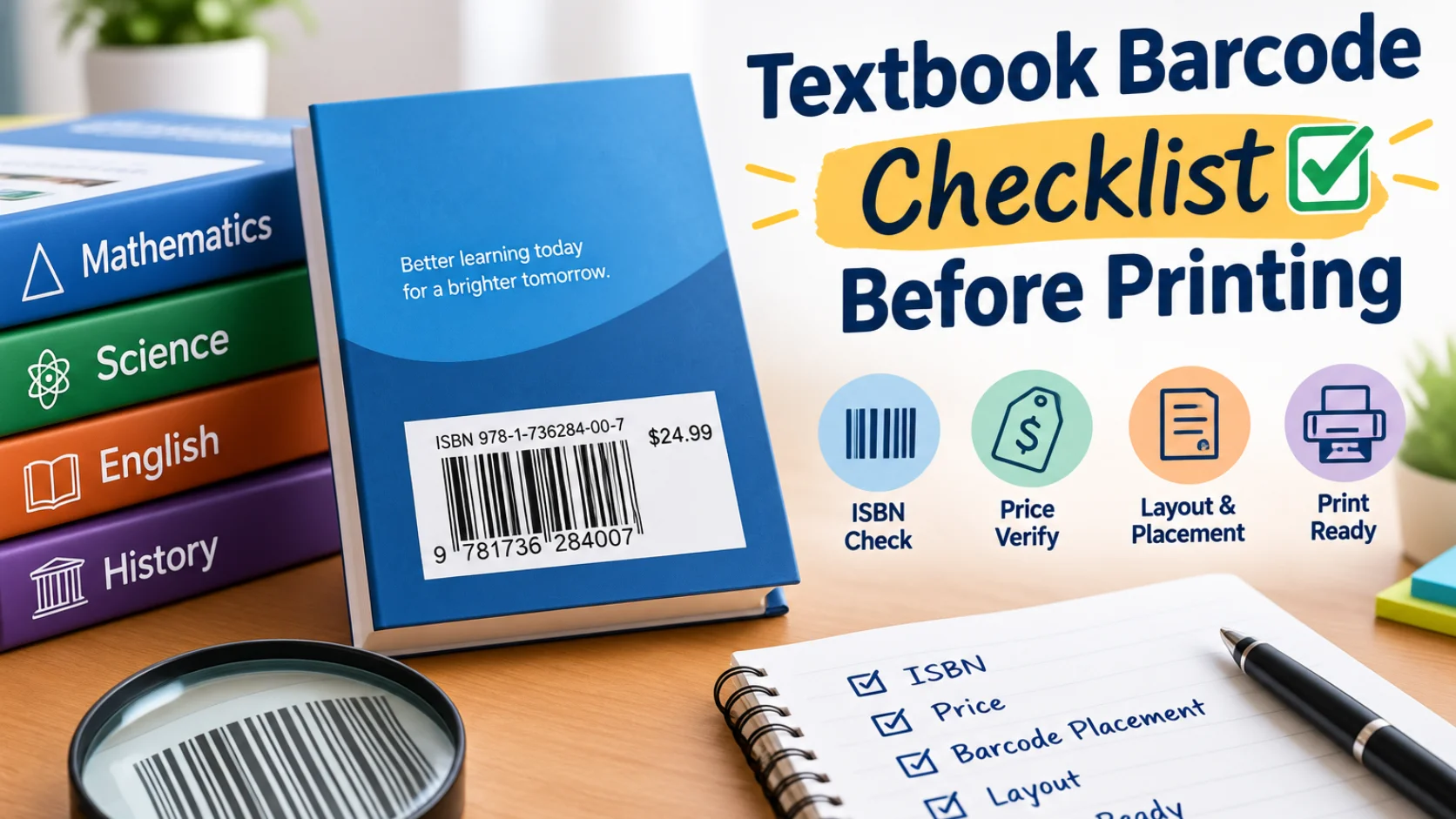
Textbook Barcode: 7 Easy Facts Every Author Should Know
Publishing a textbook involves more than writing great content. You also need to prepare your book for printing, selling, and distribution. One important detail is the textbook barcode. Many new authors see a barcode on the back of a book. However, they may not understand what it does or why it matters. The good news is that this process is easier than it seems. Once you understand the basics, choosing and using the right barcode becomes much simpler.
A textbook barcode helps stores, distributors, and readers identify a specific book. It can connect with important book information, including the ISBN and pricing details. Whether you are publishing independently or working with a publisher, understanding barcodes can help you avoid common mistakes. In this guide, you will learn seven easy facts about book barcodes. You will also understand when you need one.
1. What Is a Textbook Barcode?
A textbook barcode is a machine-readable code printed on a book. You will usually find it on the back cover. A scanner can read the barcode quickly. This helps bookstores and other sellers identify the book. Most printed books use a barcode connected to the book’s ISBN. The ISBN is a unique number that identifies a specific edition. This makes it easier for businesses to track and manage books.
Think of a barcode as a quick identification tool. Instead of typing long book details manually, a seller can scan the code. The system can then recognize the book. It may display information such as the title, edition, publisher, and price. This process saves time and reduces manual errors. That is why a properly prepared textbook barcode can be useful for books sold through retail channels.
Not every book needs the same barcode setup. Your publishing method can affect your needs. A book sold through major bookstores may need different preparation. A book printed for private use may not need retail barcode features. Understanding where and how you plan to sell your textbook is important. It can help you choose the correct option before printing begins.
2. Why a Book With Barcode Can Be Easier to Sell
A book with barcode can be easier for bookstores and retailers to process. Retail businesses often use scanning systems for inventory. When a book has a readable barcode, staff can scan it quickly. This can make receiving and selling the book more efficient. The barcode can also help businesses manage stock. They can track how many copies are available.
A book with barcode may also look more prepared for traditional retail distribution. However, the barcode itself does not guarantee sales. It simply helps identify the product within retail systems. The quality of the book still matters. Your content, cover, audience, price, and marketing can all affect performance. The barcode is one small part of the complete publishing process.
When preparing a book with barcode, placement is also important. The barcode should remain clear and easy to scan. Avoid placing important design elements too close to it. Some printers and publishing platforms provide barcode placement requirements. Checking those requirements before finalizing your cover can prevent delays. It is usually easier to fix barcode placement before printing.
A book with barcode can also make inventory management simpler. This becomes useful when you sell through several channels. For example, you may work with bookstores, distributors, schools, or direct customers. A consistent identification system can reduce confusion. It can also help distinguish one edition from another. A paperback edition and hardcover edition usually have separate ISBNs when they are different formats.
3. Understanding the ISBN Barcode With Price
An ISBN barcode with price combines book identification with pricing information. The main barcode identifies the book through its ISBN. Some book barcode formats also include a smaller section for the retail price. This can help retailers scan both the book information and pricing data. However, pricing practices can vary depending on your market and distribution method.
The ISBN is an important part of professional book publishing. It identifies a particular version of a book. Different formats may require different ISBNs. For example, a paperback edition and hardcover edition can have separate identifiers. A revised edition may also require a new ISBN. This helps retailers and libraries distinguish between different versions.
When creating an ISBN barcode with price, accuracy is essential. The ISBN used in the barcode should match your book records. Using the wrong number can create identification problems. Always check the digits before approving your final cover. It is also important to confirm the requirements of your printer or publishing platform. Different services may offer their own barcode tools or specific guidelines.
An ISBN barcode with price is especially useful when a fixed retail price applies. However, not every book needs a printed price add-on. Your decision can depend on where you sell. Some authors prefer flexible pricing across different markets. Others use a standard suggested retail price. Before adding pricing information, consider your distribution plan and future updates.
4. The Difference Between a Book Barcode and Price Information
Many authors use the terms book barcode and price together. However, these are not always the same thing. A barcode identifies the book for scanning systems. Price information may be added separately. Depending on the barcode format, the design can include extra pricing details. Understanding this difference can help you make better publishing decisions.
A book barcode and price setup can be useful for books sold in physical stores. A retailer can scan the book instead of entering details manually. Still, you should not assume every bookstore requires the same format. Distribution systems can have different rules. Always check the requirements of the platform, printer, distributor, or retailer you plan to use.
The visual design also matters. Your textbook barcode should fit naturally into the back cover. It should not make the cover look crowded. A clean white area behind the barcode can improve readability. The barcode should also have enough space around it. This empty space helps scanning equipment read the code correctly. Your cover designer or printer can often help with technical placement.
When planning a book barcode and price, think about future changes. If you plan to change your price later, printed price information may require updates. This could affect your cover file. A flexible pricing strategy may require a different approach. Therefore, it is helpful to decide your distribution model before finalizing the cover design.
5. Why an ISBN Label Matters for Textbooks
An ISBN label helps connect your book with its correct identification number. It can appear as part of the barcode design or as a separate printed element. The purpose is simple. It helps publishers, retailers, libraries, and distributors identify the correct book edition. For textbooks, clear identification can be especially important because editions often change.
A textbook may have updated chapters, exercises, or learning materials. When the edition changes, the publishing information may also change. This is why authors should understand ISBN management before printing. An accurate ISBN label can help avoid confusion between different versions. Students, teachers, and bookstores can identify the edition they need more easily.
You should also keep your book information consistent. The ISBN shown inside the book should match the ISBN connected with the edition. Your barcode should also use the correct number. Before approving files, review every detail carefully. Check the title, author name, edition, ISBN, and barcode data. A few minutes of checking can prevent expensive printing mistakes.
An ISBN label can also support better organization for publishers. If you publish multiple textbooks, each edition needs clear records. Keeping ISBN details organized can make future updates easier. It also helps when you work with printers, distributors, or retailers. Good record keeping may not sound exciting, but it can save time during the publishing process.
6. How to Choose the Right Textbook Barcode
Choosing the right textbook barcode starts with understanding your publishing goals. First, think about where you plan to sell your book. Will you sell through online stores only? Do you want bookstore distribution? Are you printing copies for schools? Your answer can affect the barcode and ISBN setup you need.
If you plan to publish a book with barcode for retail distribution, check the requirements of your chosen platform. Some services generate barcodes automatically. Others allow you to upload a complete cover with the barcode included. Never assume that every printer follows identical rules. Reviewing the platform’s current requirements before finalizing your files is always a smart step.
You should also consider the book’s format. A paperback and hardcover edition may have different publishing requirements. The same applies to revised editions. Your ISBN barcode with price should match the specific edition being sold. Using one barcode for several different editions can create confusion. Each version should have accurate identification information.
Finally, remember that a barcode is only one part of publishing. A strong textbook also needs accurate content, professional formatting, and a clear cover. Students and teachers should understand what the book offers. A properly prepared book barcode and price design can support the sales process. However, the value of the textbook still comes from the knowledge inside.
7. Common Textbook Barcode Mistakes Authors Should Avoid
One common mistake is using the wrong ISBN. Another mistake is placing the barcode too close to other design elements. A textbook barcode needs enough clear space for scanning. Stretching, recoloring, or heavily editing the barcode can also create problems. Always use a properly generated barcode that matches your correct ISBN information.
Some authors also forget to review their ISBN label before printing. This can create problems later. A simple digit error can affect book identification. Always compare the barcode information with your official book records. If you are unsure, ask your printer, publishing platform, or ISBN provider for guidance. It is better to confirm details before ordering copies.
Another mistake involves adding unnecessary price information. An ISBN barcode with price can be useful in some situations. However, it may not fit every distribution strategy. If your book will have different prices in different markets, consider this carefully. Planning your pricing and distribution before finalizing the cover can save money and prevent future redesign work.
How Does a Textbook Barcode Work?

A textbook barcode turns book information into a scannable pattern. A barcode scanner reads the pattern using light. The connected system then identifies the book. This process happens very quickly at a bookstore checkout. The barcode can also help with inventory and distribution tasks.
The barcode normally connects with your book’s ISBN. An ISBN identifies a specific book edition and format. The barcode presents that information in a machine-readable form. This is why both numbers and barcode graphics matter. They should always match your publishing records.
A book with barcode can move through retail systems more efficiently. Store employees can scan it instead of entering information manually. This saves time during sales and stock management. It also reduces the chance of typing errors. For publishers, these small benefits can become important over time.
Where Should You Put a Book With Barcode?
The back cover is the most common location for a book with barcode. Many publishers place it near the lower-right area. However, the exact position can depend on the printer. Your distributor may also have specific placement requirements. Always check those requirements before completing your cover.
The barcode needs enough clear space around it. This space helps scanning equipment recognize the complete pattern. Avoid placing colorful artwork directly behind the barcode. A clean background usually makes scanning easier. Your designer should also avoid stretching the barcode.
A book with barcode should look natural within the cover design. The barcode should not cover important artwork or text. It should also not be so small that scanning becomes difficult. Your final print file should preserve the barcode’s original proportions. These simple design choices can help avoid printing problems.
Can You Add a Price to an ISBN Barcode?
Some barcode formats can include price information. This is where an ISBN barcode with price can become useful. The price section can provide additional information to certain retail systems. However, pricing requirements can differ between markets. They can also vary between distributors and retailers.
Before creating an ISBN barcode with price, check your distribution requirements. Do not add pricing information simply because another book has it. Your publishing channel may use a different system. Your printer may also have specific technical instructions. Following the correct requirements is more important than copying another cover.
Price information can also affect future cover updates. Imagine changing your book’s retail price later. You may need to update the cover if the printed price changes. This is worth considering before you finalize your design. A little planning can make future updates much easier.
Book Barcode and Price: What Authors Should Know

The phrase book barcode and price often causes confusion. A barcode identifies the book through machine-readable information. Price information can be included separately in certain formats. These two functions are related, but they are not exactly the same.
When creating a book barcode and price setup, start with your ISBN. Make sure the ISBN belongs to the correct edition. Then confirm whether pricing information is required. If it is required, use the correct price format. Never guess the format from another publisher’s book.
Your final cover should also be checked carefully. Look at the barcode in the complete print-ready file. Make sure it is sharp and not distorted. Check the ISBN digits beneath the barcode. If a price is included, check that information as well.
Understanding the ISBN Label
An ISBN label can display the ISBN in readable text. It may appear near or below the barcode. This gives people another way to identify the book. A scanner reads the barcode, while a person can read the ISBN. Both forms can provide useful identification information.
An ISBN label should contain accurate information. One wrong digit can cause identification problems. Always compare the printed number with your official ISBN record. This is especially important when publishing several books. It is easy to confuse similar ISBN numbers.
Your ISBN label can also help distinguish different editions. For example, your revised textbook may have a different ISBN. Your hardcover version may also have another ISBN. Keeping these records organized makes publishing easier. It also reduces confusion when working with distributors.
What Happens If Your Barcode Is Wrong?
A wrong textbook barcode can create several problems. A retailer may fail to identify the book correctly. Inventory systems may also show incorrect information. In some cases, a distributor may ask you to correct the cover. These problems are usually avoidable with careful checking.
The first thing to check is your ISBN. Compare the ISBN shown on your cover with your publishing records. Then check the barcode generated from that ISBN. Make sure both pieces of information match. You should also review the book title and edition.
A wrong ISBN label can create similar problems. Therefore, do not check only the barcode graphic. Check every related number on the cover. If your textbook has several formats, review each file separately. This extra care can save you from expensive reprints.
Should You Create the Barcode Yourself?
Authors have several ways to obtain a barcode. Some ISBN agencies provide barcode options. Some publishing platforms generate them automatically. Professional designers can also prepare barcode files. Your choice depends on your publishing setup and requirements.
If you create a textbook barcode yourself, use reliable information. Never type an ISBN into an unknown barcode generator. Make sure the resulting barcode matches your book. You should also confirm the required barcode format. Your printer or distributor can provide useful guidance.
If you are unsure, working with an experienced book designer can help. A professional can place the barcode correctly on your cover. They can also check the final print file. This can be useful when preparing a book with barcode for multiple retailers.
Barcode Quality Matters During Printing

A barcode may look perfect on your computer screen. However, printing can affect its appearance. Low-quality graphics may become blurry during production. Compression can also reduce the sharpness of the barcode. These issues can make scanning more difficult.
Your textbook barcode should remain clear in the final PDF. Avoid using a tiny image that becomes pixelated. Keep the barcode at an appropriate size for printing. Do not stretch it to fit your cover design. Your designer should maintain its original proportions.
A printed proof can provide another useful check. Look at the physical barcode before approving a large print run. If possible, scan the printed proof. This gives you extra confidence before production begins. It is a simple quality check with potential long-term benefits.
Do Digital Textbooks Need a Barcode?
Digital books usually work differently from printed books. A digital edition may use an ISBN, but it does not always need a printed barcode. A barcode is mainly useful for physical retail products. Digital platforms normally use their own identification systems.
This difference is important for authors publishing multiple formats. Your paperback may have a textbook barcode on its back cover. Your digital edition may not use that same visual barcode. Each format should follow the rules of its publishing platform.
If you plan to publish both physical and digital versions, keep records organized. Track the ISBN assigned to each format. This prevents confusion during publishing. It also makes future updates easier.
How Bookstores Use a Book With Barcode
Bookstores use scanning systems to process physical products. A book with barcode can be scanned during checkout. The system can then retrieve relevant product information. The same process can support stock management.
A bookstore may receive hundreds of different titles. Manually entering every book would take much longer. Barcode scanning makes product handling more efficient. This is one reason barcodes are common on physical books.
A book with barcode can also help distinguish similar products. This matters when a publisher has several editions. Different ISBNs can identify different versions. Accurate barcode information supports this identification process.
Textbook Barcode Checklist Before Printing

Before sending your textbook to print, complete a final check. First, confirm that your ISBN is correct. Next, make sure the textbook barcode matches that ISBN. Then check its size, placement, and clarity.
Review your ISBN label carefully as well. Compare every digit with your publishing records. If your design includes pricing, check that information too. Make sure the cover follows your printer’s requirements.
Finally, open the complete print-ready PDF. Look at the barcode at normal viewing size. Then zoom in and check its edges. If possible, inspect a printed proof. These simple checks can prevent many avoidable problems.
Frequently Asked Questions
What is the purpose of a textbook barcode?
A textbook barcode provides machine-readable book information. Retailers can scan it quickly during sales. It can also support inventory and distribution systems. The barcode commonly connects with the book’s ISBN.
Is a book with barcode required everywhere?
No, requirements can vary between sales channels. Retail bookstores may have different needs from direct sales. Distributors can also have their own requirements. Always check the rules for your specific publishing channel.
What is an ISBN barcode with price?
An ISBN barcode with price includes book identification and pricing information. The exact format depends on the applicable barcode system. Some publishing channels may use it. Others may use a barcode without price information.
What does book barcode and price mean?
Book barcode and price refers to barcode information combined with pricing details. The barcode identifies the book for scanning. The price information can support certain retail systems. Requirements depend on your market and distribution method.
What is an ISBN label?
An ISBN label displays the book’s ISBN in readable form. It can appear alongside the barcode. This helps people identify the book manually. Always check that the number matches your official ISBN.
Can I change my book price later?
You may be able to change your book price later. However, printed price information can affect your cover. You should check your distributor’s requirements first. This can help you avoid unnecessary cover updates.
Where is a textbook barcode normally placed?
A textbook barcode is commonly placed on the back cover. The lower-right area is often used. However, always follow current printer requirements. Keep the area around the barcode clean and readable.
Final Thoughts
A textbook barcode is a small part of your publishing project. Still, it can be important for retail and distribution. Understanding the connection between ISBNs and barcodes makes the process easier. It also helps you avoid common publishing mistakes.
If you are preparing a book with barcode, start with accurate ISBN information. Then check the barcode and its placement carefully. If pricing is included, verify the correct format. Your ISBN barcode with price should follow your distribution requirements.
The same care applies to book barcode and price information. Always review your final cover before sending it to print. Check the barcode, ISBN, price, and overall design. A professional ISBN label can also make identification easier.
You do not need to be a publishing expert to handle this process. Take it one step at a time. Check your information before approving your final files. If you feel unsure, ask your printer or distributor for guidance.
With proper preparation, your textbook can be ready for retail distribution. A correctly prepared textbook barcode can support smooth book handling. Most importantly, it helps your physical textbook fit into retail systems. Once these details are complete, you can focus on reaching your readers.

We help authors bring their stories to life through professional online book publishing services. From manuscript formatting and cover design to Amazon KDP publishing and global distribution, we make self-publishing simple, affordable, and successful.
