
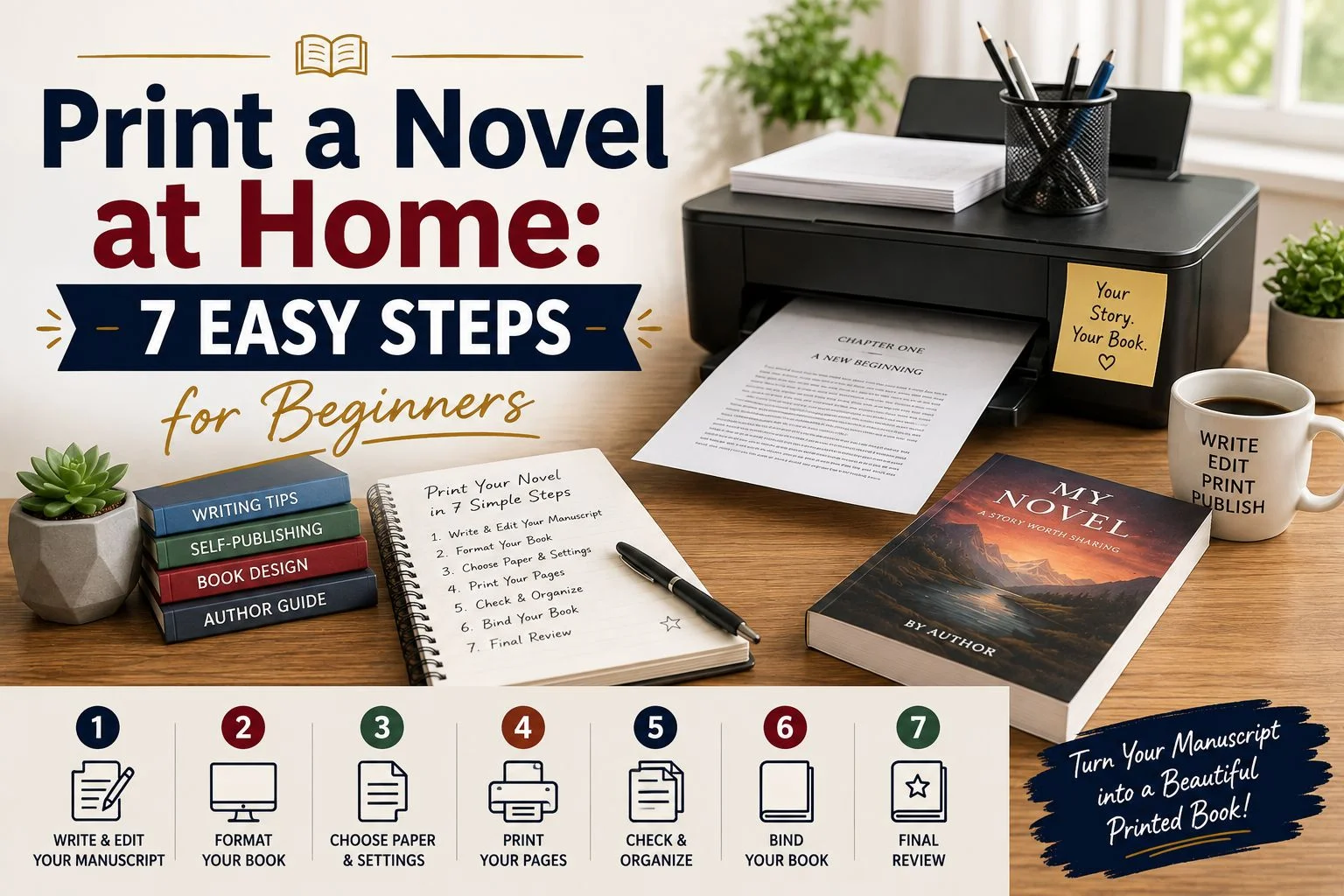
How to Print a Novel at Home: 7 Easy Steps for Beginners
Printing your own novel at home can be an exciting experience. You can turn your digital manuscript into a physical book yourself. You do not always need expensive publishing equipment for this process. A basic printer and suitable materials can get you started. However, good preparation is important before you print anything. A small mistake can affect many pages at once. That is why beginners should follow a clear process. In this guide, we will explain how to print a novel at home step by step. You will learn how to prepare your manuscript, choose paper, select printing settings, and plan your binding. These simple steps can make your first home printing project much easier.
How to Print a Book at Home
Learning how to print a book at home starts with preparing your manuscript. Your digital file should be clean before you send it to your printer. Check your chapters, paragraphs, page numbers, and spacing carefully. Make sure every chapter starts where you want it. Remove extra spaces and unnecessary blank pages. You should also check your spelling and punctuation before printing. Fixing mistakes on your computer is much easier than fixing printed pages. A physical copy can help you find problems later. However, your digital manuscript should already be properly prepared.
The page size is another important part of how to print a book at home. Novels are often printed in smaller book sizes. Popular choices include 5.5 x 8.5 inches and 6 x 9 inches. Choose one size before you format the manuscript. Your page size affects your margins and total page count. It can also affect the thickness of your finished book. Do not change the page size after completing your formatting. Doing so can move text and chapter breaks. Always create a sample before printing the entire manuscript.
Your margins need careful attention as well. The inside margin needs enough room for binding. This is especially important for thicker novels. If the margin is too narrow, reading becomes uncomfortable. Some words may also sit too close to the spine. Your outside margins should also look balanced. Page numbers should stay away from the edges. Check your printer’s printable area before finalizing your document. Different printers can have different margin limitations. A test page can help you find the right settings.
Step 1: Format Your Novel Before Printing
The first step in how to print a novel at home is proper formatting. Your novel should look organized before printing begins. Start by selecting a simple and readable font. Serif fonts are commonly used for printed fiction. Choose a comfortable font size for your readers. A size around 11 or 12 points often works well. Your final choice depends on the font you select. Avoid using too many different fonts in one book. Consistent formatting makes the novel easier to read.
Paragraph formatting is also very important. Many novels use a first-line indent for new paragraphs. This gives the pages a familiar book-like appearance. Do not create indents by pressing the spacebar repeatedly. Use the paragraph settings in your writing software instead. This keeps the formatting consistent across the entire manuscript. It also prevents problems when you make later changes. Keep your paragraph spacing consistent from chapter to chapter. Small formatting details can make a major visual difference.
Your chapter titles should also follow one style. Use the same font and size for every chapter heading. Keep their position consistent on each chapter-opening page. You can place chapter titles near the top of the page. Some authors prefer a larger space before each chapter. Both styles can work when used consistently. New chapters should normally begin on fresh pages. Use proper page breaks rather than repeatedly pressing Enter. This will keep your chapters organized during editing.
Check Your Page Numbers and Chapter Breaks

Page numbers are another important part of book formatting. They should appear in the same position throughout your novel. You can place them at the bottom or top of your pages. Make sure they are not too close to the edge. Also check whether your first pages need numbering. Some book layouts leave certain opening pages unnumbered. This depends on the style of your book. A simple home project can use a straightforward numbering system.
Chapter breaks should also be checked carefully. Each chapter should begin on the correct page. You should not have accidental blank pages between chapters. Look through the complete document before printing. Pay special attention to the last page of each chapter. A single formatting change can move several pages. This can change your page numbers and chapter positions. Always review your file again after making major changes.
Step 2: Choose the Right Printer
Choosing a suitable printer is the next important step. You do not necessarily need a professional printing machine. Many home printers can handle a personal novel project. Your choice depends on your budget and printing needs. A laser printer can be useful for text-heavy novels. It usually produces sharp and clean black text. An inkjet printer can also work well for home projects. It may offer more flexibility for color printing.
Think about your long-term printing costs before choosing a printer. Ink and toner can become expensive over many pages. A low-cost printer may not always be the cheapest option. Check the cost of replacement cartridges before buying one. You should also check the printer’s supported paper sizes. Make sure it can handle the paper you plan to use. This is especially important if you choose a non-standard book size.
When learning how to print a novel at home, testing your printer is essential. Never print the complete manuscript immediately. Start with several sample pages instead. Print pages from different parts of your manuscript. Check the beginning, middle, and end of the document. Look at text sharpness and page alignment. Also check the margins and page numbers. This small test can prevent major printing problems.
Step 3: Select Suitable Paper
Paper has a major effect on your finished book. You do not always need expensive publishing paper. However, extremely thin paper may not be ideal for novels. Text can sometimes show through from the other side. Thin paper can also feel weak when handled often. Choose paper that works well with your printer. It should also feel comfortable when you turn the pages.
Standard printer paper can work for a practice copy. It is affordable and easy to find. This makes it useful for checking your manuscript. If you want a better-looking personal copy, consider better paper. You can test different weights before making your final choice. Print a few pages on each option. Compare their appearance and feel. This gives you a better idea of what suits your project.
Paper color is another choice worth considering. Bright white paper provides strong contrast with black text. Cream or off-white paper can provide a softer reading experience. Fiction books often look comfortable on warm-toned paper. However, there is no single correct choice. Your printer should also support your selected paper type. Always check the manufacturer’s recommendations before printing a large batch.
Why Paper Thickness Matters
Paper thickness affects the overall feel of your novel. Thicker paper can make a book feel more substantial. However, it also increases the total thickness of the book. This can make binding more difficult. A very thick novel may require stronger binding materials. It may also need a larger spine area. Therefore, paper selection should happen before binding decisions.
If you are practicing how to print a book at home, start simply. Use paper that your printer handles reliably. Do not experiment with several materials at the same time. First, make sure your basic process works. You can then improve the paper quality later. This approach saves both money and frustration.
Step 4: Set Up Double-Sided Printing
Double-sided printing can make your home-printed novel more practical. It allows you to use both sides of each sheet. This reduces paper consumption and creates a thinner book. It also makes the pages feel more like a traditional book. Some printers offer automatic double-sided printing. This feature is often called duplex printing.
If your printer supports automatic duplex printing, test it first. Print only a few pages before starting the full project. Check how the printer turns each sheet. Make sure the front and back pages face correctly. Different printers may use different page-flipping settings. Choosing the wrong setting can reverse your pages. A small test can help you avoid this problem.
If your printer does not support automatic duplex printing, manual printing is possible. You can print one side first. Then place the pages back into the printer. The second side can then be printed. However, this process requires careful attention. The correct paper direction depends on your printer. Always test with a small number of pages first.
Keep the Pages in the Correct Order
Page order becomes especially important with double-sided printing. A novel may contain hundreds of pages. One mistake can place several pages in the wrong position. Before printing everything, test your printer’s page order. Use a short sample document with numbered pages. This lets you understand how the paper moves through the printer.
When printing a complete novel, keep your workspace organized. Avoid mixing printed and unprinted sheets. Separate them into clearly marked stacks if necessary. Check the pages after each printing batch. This is especially helpful when printing manually. A little organization can prevent hours of extra work.
Preparing for Book Press Binding

After printing, your next concern is usually binding. One option is book press binding. This method can help create a more traditional handmade book. A press holds the pages firmly during certain binding processes. It helps keep the page block straight and stable. This can be useful when working with adhesive binding.
You do not necessarily need professional equipment for your first project. Beginners can start by learning basic binding techniques. If you enjoy the process, you can explore proper book presses later. The right equipment can make repeated projects easier. However, equipment alone will not guarantee good results. Proper page alignment is still extremely important.
Before starting book press binding, organize your pages carefully. Make sure every page is in the correct order. Check for missing or duplicated pages. Look at the edges of the page stack. They should be reasonably straight before pressing. Even small alignment problems can become visible after binding.
Why Book Presses Can Be Useful
Good book presses provide even pressure across your pages. This can help keep the book block aligned. They are particularly useful during certain adhesive binding methods. A stable press can also make the process more controlled. However, beginners should learn the basics before buying expensive equipment.
If you plan to make several handmade books, book presses may become useful. They can save time during repeated binding projects. They can also help create more consistent results. Before purchasing one, consider your book size and expected workload. A small project may not justify expensive equipment.
What Comes Next?
At this point, you should have a properly formatted manuscript. You should also have a tested printer and suitable paper. Your printing settings should be ready for the complete project. The next stage involves printing the full book and preparing it. You will then organize the pages and choose your binding method.
Step 5: Print the Complete Novel
Once your manuscript and printer are ready, start printing the full novel. Before that, check your ink, toner, and paper supply. Print the book in smaller batches instead of doing everything together. Check each batch for missing pages and printing problems. Look at the page numbers and chapter order carefully. This is especially important with double-sided printing. A small mistake can affect many pages if you continue printing. Taking a few minutes to check each batch can save paper and time.
When learning how to print a novel at home, always watch the paper direction. Automatic duplex printing can make the process easier. If your printer requires manual printing, test the page direction first. Print a few numbered pages to understand how your printer works. Once the settings are correct, continue with the complete manuscript. Keep printed pages separate from unused paper. This simple organization will make the next steps much easier.
Step 6: Organize and Prepare the Pages
After printing, place all pages in the correct order. Check every page number from beginning to end. Look for missing, repeated, or blank pages. You should also check the chapter openings again. Make sure the pages are straight before starting the binding process. If the edges are uneven, you can carefully trim them. A paper cutter can provide cleaner results than scissors. However, use cutting tools carefully and follow their safety instructions.
If you are learning how to print a book at home, remember that presentation matters. Clean and organized pages make binding easier. They also give your finished book a better appearance. You do not need perfection for your first project. Focus on creating pages that are neat, readable, and comfortable to handle. You can improve your technique with every new copy.
Step 7: Bind Your Novel
The final major step is binding your printed pages. Your choice depends on the book size and your available tools. Short projects may work with simple binding methods. A full novel usually needs a stronger option. Adhesive binding can create a paperback-style appearance. Coil and comb binding are also possible for personal copies.
Book press binding is another option for beginners who want a stronger finish. A press holds the pages firmly while the adhesive sets. This helps keep the book block straight and aligned. Before applying adhesive, make sure all pages are in order. Follow the instructions for your chosen binding material. Give the book enough time to dry before handling it.
Book Press Binding for Beginners

Book press binding may seem difficult at first. However, the basic idea is quite simple. Pages are arranged into a neat book block. The spine is then prepared for the chosen binding method. Adhesive is applied carefully and evenly. The pages are then pressed while the adhesive dries.
If you are new to book press binding, practice first. Use a smaller document before working on your complete novel. This helps you understand page alignment and pressure. It also lets you test your adhesive and paper. Taking your time usually produces better results than rushing.
Using Book Presses at Home
Book presses can make some binding methods easier. They provide steady pressure across the page block. This can improve alignment and help create a cleaner spine. However, beginners do not always need specialized equipment. A simple binding method may be enough for one personal copy.
If you plan to make several handmade books, book presses can be useful. Choose a press that fits your book size. Make sure it provides even pressure across the pages. Avoid using excessive pressure because it can damage your book. Always follow the instructions provided with your equipment.
How to Print a Novel Without a Publisher
Many writers want to know how to print a novel without a publisher. Home printing gives you one simple option. You can prepare, print, and bind a personal copy yourself. You control the manuscript, paper, design, and binding. This can be useful for proof copies, gifts, and personal projects.
Learning how to print a novel without a publisher can also help before professional printing. A physical proof lets you see problems that may not appear on your screen. You can check the margins, page breaks, font size, and overall appearance. After making corrections, you can prepare the final publishing file.
However, home printing may not be practical for hundreds of copies. Paper, ink, equipment, and time can become expensive. Professional printing may be better for larger quantities. Home printing is often most useful for small projects and proof copies.
How to Print a Book at Home for a Proof Copy
A proof copy is an excellent reason to learn how to print a book at home. You can use it to check your manuscript before professional printing. Read through the physical copy carefully. Look for formatting mistakes and awkward page breaks. Check the chapter titles and page numbers as well.
You can also inspect your cover using a home proof. Print it separately and place it around your pages. Check the size, alignment, and overall appearance. If something looks wrong, return to your digital file. Make the necessary changes before ordering professional copies.
Common Mistakes to Avoid
One common mistake is skipping the test print. Always test several pages before printing the entire novel. Another mistake is using paper without checking printer compatibility. Some paper can cause feeding or printing problems.
Incorrect margins can also create problems. Text should not sit too close to the binding. Check your inside margin before printing. Also avoid rushing the binding process. Give adhesives enough time to set properly.
Is Printing a Novel at Home Worth It?

For personal copies, home printing can be a good choice. It gives you control over the complete project. You can print one copy without ordering a large quantity. It is also useful for checking your manuscript physically.
However, large print runs can become expensive. You need to consider paper, ink, equipment, and your time. Professional printing may be more practical for larger quantities. Your goal should determine which option works best.
Frequently Asked Questions
Can I print a novel with a home printer?
Yes, many home printers can handle personal novel projects. Start with a small test before printing the complete book.
What paper is best for printing a novel?
Lightweight, good-quality paper is usually a good choice for novels. Choose paper that your printer can handle easily. Always test a few pages before buying paper in large quantities.
Can I print my novel on both sides?
Yes, you can use double-sided printing for your novel. It saves paper and makes the finished book thinner. Check your printer settings before printing the complete manuscript.
Do I need book presses?
No, book presses are not required for every project. They can be useful for certain binding methods.
Can I bind my novel at home?
Yes, you can bind a novel at home using different methods. Adhesive binding, coil binding, and other simple methods can work well. Choose a method that matches your skills and equipment.
Do I need book presses for home binding?
No, book presses are not necessary for every home project. However, they can help keep pages straight during certain binding methods. They are more useful when you plan to make several books.
Is book press binding good for novels?
Yes, book press binding can create a strong and neat finish. It holds the pages firmly while the binding material sets. Beginners should practice with a smaller project first.
Can I print a novel without a publisher?
Yes, you can print personal copies without a traditional publisher. Learning how to print a novel without a publisher gives you more control over your book. You can manage the formatting, printing, and binding yourself.
Is home printing cheaper than professional printing?
Home printing can be cheaper when you only need a few copies. However, large print orders may become expensive because of paper, ink, and time. Compare both options before choosing a method.
Should I print a proof copy first?
Yes, printing a proof copy is highly recommended. It helps you find formatting, spacing, and printing problems. You can fix these issues before making your final copies.
Can I use Microsoft Word to format my novel?
Yes, Microsoft Word can work well for basic novel formatting. You can set the page size, margins, fonts, paragraph spacing, and page numbers. Always review the final layout before printing.
Conclusion
Learning how to print a novel at home is easier when you follow simple steps. Start with a properly formatted manuscript and test your printer. Choose suitable paper and print your pages carefully. Check their order before starting the binding process. You can use book press binding for a stronger handmade finish. Book presses can also help keep your pages aligned. If you want independence, learning how to print a novel without a publisher can be a useful skill. Start with one proof copy and improve your process with practice.

We help authors bring their stories to life through professional online book publishing services. From manuscript formatting and cover design to Amazon KDP publishing and global distribution, we make self-publishing simple, affordable, and successful.
