Is This Graphic Packaging for Books : 7 Proven Tips
Understanding Graphic Packaging for Books
Introduction: Understanding Graphic Packaging for Books
The world of publishing is extremely competitive, and the landscape has changed so that a book is not valued solely for its content. The visual presentation, packaging quality, and overall design experience are very important for drawing in readers. For authors, publishers, and brands seeking their books to rise above the competition in bustling markets, graphic packaging for books is a must-have tactic.
A professionally designed book package blends the creative visuals, typography, illustrations, colors, and branding to connect with readers. From a children’s book to an educational book, from a fiction novel to a high-quality collector’s edition, packaging is a critical component of a book’s message, communicating its worth and purpose to the reader before they ever pick it up.
Modern publishers recognize that a book cover is not just intended to protect the book. It’s a very strong marketing tool that can impact buying choices. In addition to appealing designs, packaging for books, custom materials, and uniform branding make a positive impression on customers.
For writers and business owners looking to get into publishing, it is wise to invest in their publishing design, as it can help them gain more visibility and create a stronger brand identity that can boost their chances of success.
What Is Graphic Packaging for Books ?
Graphic packaging for books involves the design and art used to present a book in an attractive, professional, and marketable manner. This encompasses not only art and graphics for the cover and inside layout but also all the specialty packaging materials, promotional graphics, and branding elements.
In contrast to traditional book package design, modern graphic packaging emphasizes the book package as a whole experience around the book. The aim is to establish, apart from being attractive to look at, instant communication about the message, genre, and value of a book.
The successful packaging strategy can encompass:
- Professional cover artwork
- Custom typography selection
- Brand-focused design elements
- Premium printing options
- Protective packaging solutions
- Digital marketing images for websites
For instance, a luxury cookbook might necessitate elegant book cover packaging with premium finishes, and a children’s book series might call for vibrant graphics and a memorable brand.
The packaging solution should be based on the target audience, publishing objectives, and the type of book being produced.
The Role of Packaging in Modern Book Publishing

With the rise of online bookstores and digital marketing platforms, the publishing industry has evolved a lot. Readers can find books online today, before going into a brick-and-mortar store, via websites, social media, and online marketplaces.
This has made presenting the image more important than ever. With a professional package, a book can get noticed within seconds.
Creating a Strong First Impression
A first impression is often a lasting impression on readers. A well-formulated cover, appealing packaging, and a strong brand can help pique the interest of those who might want to delve deeper into a book.
The design may lead readers to overlook a high-quality book, whereas an attractive design can increase readers’ curiosity and engagement.
That’s why it’s worth using professional design services for many authors and pocket book publishers. They know how packaging relates directly to marketing success.
Improving Brand Recognition
The creation of a good visual identity can help authors and publishers create recognition over time. Books that share a brand or series are easy to identify due to consistent color, font, logo and design style.
If the books in a series have similar cover designs, for instance, it will be easy to identify them on shelves or online.
This is an important aspect of book branding design, where each and every visual component plays its part to make a professional publishing identity.
Why Publishers Invest in Professional Book Packaging
It takes more than good writing to write a successful book. The presentation should also be in keeping with what readers and the market expect.
There are a number of benefits to professional packaging for publishers and authors.
Increasing Market Appeal
With thousands of books being sold in bookstores and online, having a well-designed book package is a great way to help a publication stand out.
Professional, organised and visually appealing books naturally appeal to readers. Quality packaging engenders trust and conveys that the package’s contents are significant.
Enhancing Reader Experience
Packaging establishes an emotional connection prior to the reading experience. Elements such as:
- Cover artwork
- Material quality
- Typography
- Color selection
- Additional packaging features
can affect the reader’s impression of a book.
Custom-printed boxes can add value and create an unforgettable unboxing experience for special editions, gift books, and premium publications.
Supporting Marketing Efforts
Often, a good packaging design facilitates marketing. Beautiful book graphics work best on:
- Social media platforms
- Author websites
- Online bookstores
- Advertising campaigns
If someone has professional graphics and a recognized brand, it is easier for them to promote and share their work with readers.
The Importance of Book Cover Packaging in Publishing Success

Book cover packaging plays a crucial role in ensuring the success of a publishing deal. Book cover packaging is very important to the success of a publishing deal.
The cover is usually the initial encounter that a reader has with a book. A good cover should convey the book’s genre, mood, and target audience at a glance.
Strategic decision-making in professional book cover packaging involves making the book look good and competitive.
Elements of Effective Book Cover Packaging
Eye-Catching Visual Design
Images, illustrations, and graphics should be pertinent to the book’s theme and appealing to the intended audience.
Strong Typography
The title and author’s name should be legible and well balanced.
Appropriate Color Selection
Color affects feelings and perceptions. For example:
Bright colors might draw children’s attention.
Dark colors are appropriate for mystery or thriller books.
For high-end publications, elegant colors can be used
Consistent Branding
Each design element must help to identify the author/publishing company.
When a package is professionally designed, it helps establish a connection between the reader and the book before the reader even opens it.
How Graphic Packaging Supports Different Types of Publishers
Different types of publishers can benefit from Graphic Packaging in various ways. There are multiple ways graphic packaging supports different types of publishers.
Each publisher will have varying package needs based on their audience and objectives.
Independent Authors
Self-published authors often have to do everything themselves, as they are responsible for the entire design solution. They can compete with traditionally published books by using professional packaging.
Educational Publishers
Books for education should have good layout, well-organized visuals, and designs that are easy for readers to understand and learn from.
Pocket Book Publishers
Pocket book publishers specialize in producing low-cost, portable books, but today they still need a good design to sell their books in the market. These books attract interest and are cost-effective with good packaging.
Businesses and Brands
Packaging can help reinforce a company’s identity when producing branded books, manuals, or promotional publications.
Is This Graphic Packaging for Books : 7 Proven Tips

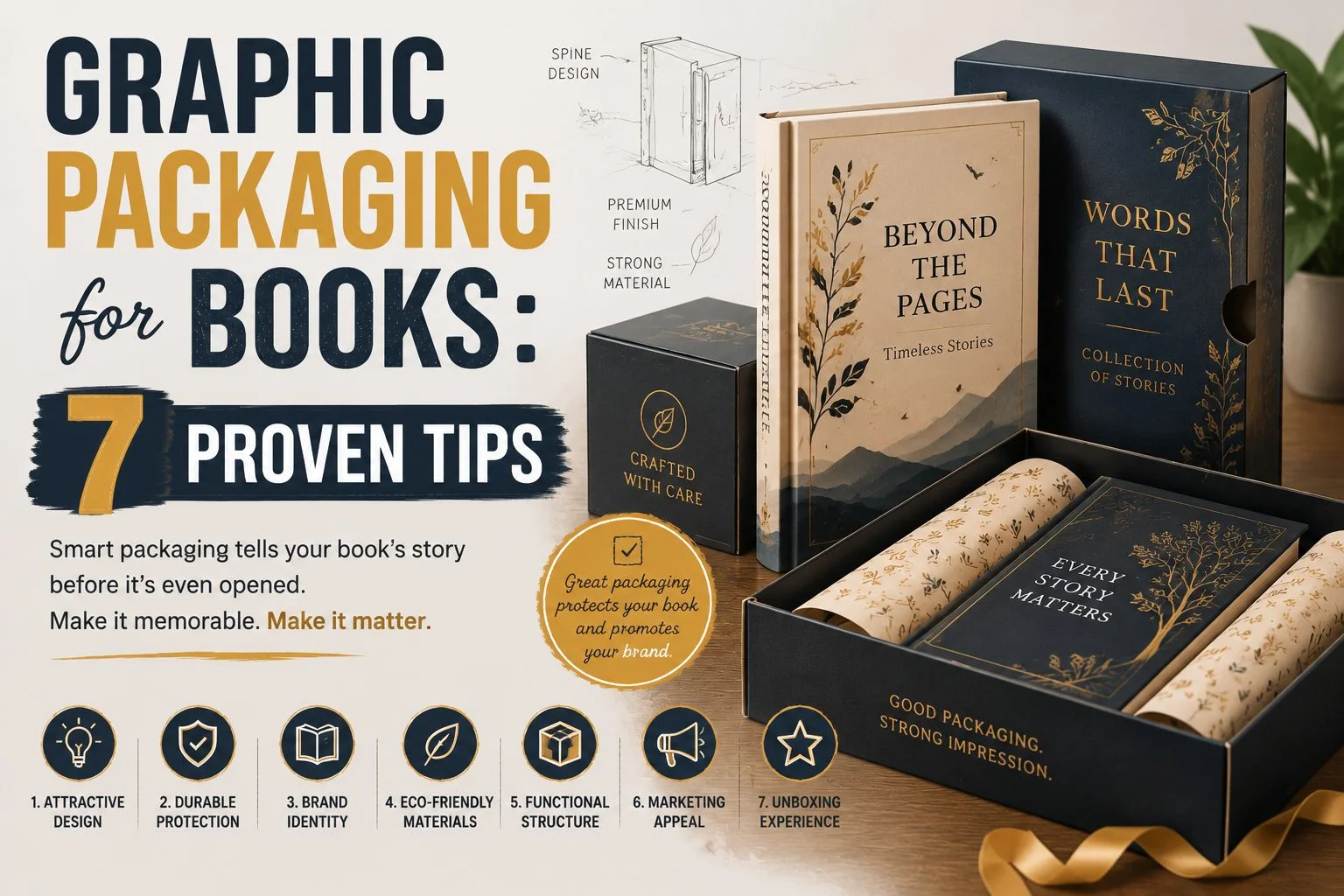
7 Proven Tips for Effective Graphic Packaging for Books
Writing great content is not the only way to make a great book. In today’s competitive publishing industry, visual presentation is a key factor in attracting readers and boosting sales. Graphic packaging for books helps authors and publishers turn ordinary manuscripts into professional-looking products that reach their audience.
The packaging solution is a blend of creative design, branding, printing, and marketing. These time-tested tips can take you to an impactful publishing product, whether you are publishing a novel, an educational book, a children’s book, or a premium edition.
Tip 1: Understand Your Target Readers Before Designing
Understanding the audience is the first step towards creating effective graphic packaging for books. What is well received by one group of readers might not be by another.
Before starting the design process, authors and publishers should analyze:
- Reader age group
- Book genre
- Market expectations
- Competitor designs
- Reader preferences
For instance, a children’s book will need colorful illustrations, fun typography, and engaging visuals. Conversely, a corporate book might need a clean, professional, and contemporary look.
Knowing your audience helps you make design choices that cater to readers’ expectations.
Research Competitor Book Designs
It’s a good idea to learn from successful books in the same genre. Publishers can identify:
- Popular color schemes
- Common design patterns
- Effective cover layouts
- Market trends
But it isn’t about copying competitors. Rather, the designers should develop creative packaging ideas that give the products an exclusive identity.
Being well researched enhances the effectiveness of book branding design and makes a book more noticeable in the market.
Tip 2: Create Professional Book Cover Packaging
One of the most crucial components of any publication is its cover. Readers will make this initial impression, and whether or not they have a good first impression with a book can make or break whether or not they continue to read it.
Professional book cover packaging involves creativity and strategy to effectively convey the book’s message.
A good cover should contain:
- A striking title design.
- A memorable title design.
- Appropriate imagery
- Clear author branding
- Balanced layout
- Professional typography
Create designs for physical and electronic media. Develop designs for media—physical and electronic.
Design for Both Physical and Digital Platforms
Modern books can be found in a variety of locations, such as:
- Amazon listings
- Online bookstores
- Social media promotions
- Physical bookstores
The goal of a cover is not only to be aesthetically pleasing when printed, but also when viewed as a small digital image.
Professional designers consider how the design appears across various platforms to increase visibility.
Use Packaging Elements That Add Value
For premium editions, special releases, and gift books, add-on packages can enhance the experience.
Elements such as:
- Protective covers
- Special finishes
- Premium materials
- Decorative packaging
can add to the value of a publication.
Tip 3: Use Custom Printed Boxes for Premium Book Presentation
Packaging doesn’t just come in the form of a book cover. Custom-printed boxes are now being used by many publishers to offer readers a luxurious experience.
Custom packaging is particularly beneficial for:
- Collector editions
- Book series
- Educational kits
- Gift sets
- Brand collaborations
The customized box enables publishers to maintain a brand presence beyond the book.
The advantages of custom printed boxes are many.
Benefits of Custom Printed Boxes
Stronger Brand Recognition
A branded box is another avenue for displaying logos, colors, and design elements.
Better Customer Experience
Consumers love to receive special, well-presented products.
Protection During Delivery
With online sales, good packaging can ensure that books are not damaged during delivery.
Creating a Premium Unboxing Experience
Unboxing is a part of the marketing experience. Customers frequently post photos of their new products on social media, which helps to promote the author and publisher in a different way.
The beauty of the book design coupled with custom printed boxes will make a publication more special and valuable.
Tip 4: Develop a Strong Book Branding Design Strategy
A successful book is not only a product but also a brand. When an author does a good job with their book’s branding design, they’re able to build recognition and establish long-lasting relationships with readers.
When you brand, you are making consistency in:
- Book covers
- Series designs
- Author logos
- Promotional materials
- Social media graphics
Building a Recognizable Book Series
If an author is producing several titles, it is important that the titles keep a consistent brand.
The series should continue:
- Similar typography
- Matching color themes
- Connected visual styles
- Symbols or characters that are easily identified.
This assists readers to spot the book they are looking for if they wish to read a second one in the same series.
Creating Emotional Connections
Well-branded products evoke emotions and expectations. An effective book package conveys professionalism, trust, and quality before the reader opens the book.
That’s why many successful publishers put a lot of effort into book branding and design for their marketing plans.
Tip 5: Choose Designs That Support Different Publishing Formats
Books come in various formats, and each format has its own design requirements.
Common formats include:
- Hardcover books
- Paperback books
- E-books
- Audiobook editions
- Special collector versions
A good packaging strategy is important for it to be good in all formats.
Hardcover Packaging
The hardcovers may concentrate on quality of appearance and durability. They may include:
- Dust jackets
- Embossed designs
- Special finishes
- High-quality materials
- Paperback Packaging
Paperback Packaging
Paperbacks must have good yet affordable book designs. There is a need to balance cost and professional appearance for publishers.
Digital Book Presentation
Cover design is especially important for e-books as it is the first thing people will see when they view the book online.
When it comes to books and publishing, a good graphic package will take into account every format to ensure brand identity is maintained across the board.
Tip 6: Work With Professional Publishing Experts
To make professional book packaging, you need to have a number of skills such as:
- Graphic design
- Editing
- Illustration
- Formatting
- Marketing knowledge
Common design errors can be avoided by working with experienced publishing professionals.
Benefits of Professional Support
Better Quality Control
Experts know the industry standards and make sure that the finished product is professionally done.
Market-Focused Design
Experts are up to date on the latest trends and readers’ expectations.
Complete Publishing Solutions
Numerous publishing experts offer a range of services, from concept to production.
For authors who wish to compete with other pocketbook publishers and professional publishing firms, it is particularly useful.
Tip 7: Optimize Packaging for Marketing and Sales
The ultimate purpose of packaging is not only to create a good package but also to aid the book’s sales.
By having a strong Packaging strategy, you can help improve:
- Online visibility
- Customer interest
- Brand recognition
- Marketing performance
- Packaging is essential for any digital marketing efforts.
Use Packaging in Digital Marketing
Visuals in books can be used for:
- Social media campaigns
- Website promotions
- Email marketing
- Advertising materials
Great images of books and packaging produce better promotional material.
Make Your Book Shareable
A unique and professional book is more likely to be shared with readers.
Books can be promoted through attractive packaging elements such as custom-printed boxes and appealing book-cover packaging.
The Role of Pocket Book Publishers in Modern Packaging

Pocket book publishers face special challenges, since they produce books that are affordable yet maintain some quality.
To package pocket books, the following is necessary:
- Cost-effective materials
- Attractive designs
- Efficient production
- Strong branding
With a well-designed packaging strategy, small formats can be successful against big publications.
With creative design decisions and production techniques, publishers can produce affordable books without sacrificing the reader’s experience.
Combining Graphic Packaging With Publishing Success
The publishing industry is continually evolving, and readers have more than just good content expectations. They seek quality, creativity, and memorable experiences in their product.
Good book and publishing graphic packaging combines:
- Visual storytelling
- Professional design
- Brand development
- Marketing strategy
Thoughtful packaging opens the door for authors and publishers to attract readers and establish a successful publishing identity.
Is This Graphic Packaging for Books: 7 Proven Tips
Latest Graphic Packaging Trends in the Publishing Industry
The latest trends in the graphic packaging sector of the publishing industry are discussed.
The publishing industry is always evolving, and readers are always more visually oriented. Presentation is a key way books can compete today, alongside their stories. Book graphic packaging and publishing are a mix of creativity, technology, and marketing that can be used to produce the attention-grabbing and purchase-inducing packages that people are looking for today.
Now publishers are looking at creative packaging strategies to offer readers something that they can’t get anywhere else. Packaging has become an integral component of the publishing journey, from materials to interactive designs.
Trend 1: Minimalist and Modern Book Packaging Designs
Minimalistic, modern book packaging designs are gaining popularity. Minimalistic and modern book packaging designs are a popular trend these days.
Minimalist design is one of the largest trends in publishing. Some popular books feature simple layouts, perfect typography, and elegant colors to give them a premium look.
The minimalist packaging emphasizes:
- Clear messaging
- Strong visual hierarchy
- Professional appearance
- Easy recognition
Minimalism is key for modern publishers, which means they need to avoid adding too many design elements.
It works particularly well with business books, novels, and high-quality publications that rely on professionalism.
Trend 2: Sustainable and Eco-Friendly Packaging Solutions
Environmental awareness has taken hold in many industries, such as publishing. Consumers are more and more drawn to brands that are responsible with materials.
Publishers are adopting:
- Recyclable packaging
- Sustainable paper materials
- Eco-friendly printing methods
- Reduced plastic usage
Custom-printed boxes are a great way for publishers to safeguard their books cost-effectively while also demonstrating their eco-consciousness.
Eco-friendly packaging may also enhance a publisher’s brand image and appeal to readers who are concerned about environmental issues.
Trend 3: Interactive and Premium Reader Experiences
The third trend is interactive and premium reader experiences. The third trend is interactive and premium reader experiences.
Today’s readers want more from an item than just a book.
To create interactive experiences, publishers are employing:
Special edition packaging
Collectible designs
Bonus materials
Creative opening experiences
Premium book cover packaging, customized boxes, or extra artwork can be examples of limited edition book packaging.
These features enable readers to relate to the product and enhance the publication’s utility.
Common Mistakes to Avoid in Book Packaging
Even the best book idea can fail to “take off” if the packaging isn’t to professional standard. If a reader does not like the design, it will lead to lower reader interest and impact sales.
Awareness of typical errors allows authors and publishers to produce better products.
Mistake 1: Ignoring the Target Audience
The first mistake is to overlook the Target Audience. The first error is to ignore the Target Audience.
The biggest error is creating a book without taking readers into account.
Different audiences have different expectations.
For example:
- Children like designs that are colorful and creative.
- Children love colorful and creative designs.
- Professional layouts are a favourite for business readers.
- Fiction readers are looking for genre-specific visuals.
The key to a successful package is always to communicate to the right people.
Mistake 2: Poor Quality Cover Design
The cover is frequently the first marketing tool employed in a book. A poorly done cover can deter readers from an otherwise fine publication.
Some frequent cover errors are:
- Difficult-to-read titles
- Poor image selection
- Unbalanced layouts
- Incorrect typography choices
Packaging the books professionally ensures that all visual elements serve the book’s purpose and compel readers to pay attention.
Mistake 3: Lack of Consistent Branding
Many writers write one book in a series and do not consider building a long-term brand.
Inconsistency can make it difficult for readers to identify future books.
There are three things that are critical for strong book branding design:
- Consistent colors
- Similar design styles
- Recognizable elements
- Professional presentation
Authors can establish trust and recognition over time with a consistent brand.
Mistake 4: Choosing Packaging Without Considering Costs
The benefits of premium packaging are enhanced presentation, but the publishers need to be aware of the production costs.
The following are the key factors that should be optimized in a successful packaging strategy:
- Quality
- Budget
- Target market
- Production requirements
In other cases, pocketbook publishers require a solution that is cost-effective yet still offers an appealing design.
Benefits of Professional Graphic Packaging for Books
For authors, publishers, and businesses, there are several benefits to investing in professional packaging.
Benefit 1: Creates a Strong First Impression
One benefit of this is that it makes a good first impression.
It only takes a few seconds for readers to make a decision on whether to dive into a book or not. The professional packaging instantly conveys quality and credibility.
A good book evokes interest and generates curiosity.
Benefit 2: Improves Brand Recognition
Great packaging can get readers to recall authors and publishers.
By using the same brand design for their books and series, publishers can establish a recognizable book identity.
The more people know about your brand, the easier it will be to promote future releases.
Benefit 3: Increases Marketing Opportunities
Attractive promotional materials are available through professional packaging.
Publishers can use book designs for the following:
- Social media campaigns
- Website banners
- Advertisements
- Email marketing
- Online marketplaces
Quality graphics enhance the audience’s experience and promotional outcomes.
Benefit 4: Adds Value to the Product
Book packaging can make books look more special if it is premium packaging.
Features such as:
- Custom designs
- Quality materials
- Special editions
- Custom printed boxes
- can add to the worth of a book.
Unique products are products that readers are willing to spend more on.
Benefit 5: Helps Books Compete in a Crowded Market
Each day, thousands of books are released. It takes more than good writing to stand out.
Professional graphic packaging for books makes them stand out in bookstores and on the internet.
How Professional Packaging Supports Authors and Publishers
Professional Packaging supports authors and publishers in several ways. There are several ways Professional Packaging supports authors and publishers.
The presentation of a product is not the only thing that defines professional packaging. It is a blend of creativity, marketing strategy, and publishing knowledge.
A complete packaging solution can include:
- Concept development
- Cover creation
- Interior design
- Illustration
- Branding strategy
- Printing guidance
- Marketing support
This holistic approach makes it possible to realize an idea and turn it into a marketable book.
Whether you are a self-publishing author or one of a number of pocket book publishers, creating professional packaging can help get your book noticed by more readers.
Conclusion: The Future of Graphic Packaging for Books
This book concludes with a look at the Future of Graphic Packaging for Books.
The world of publishing is fiercely competitive, and presentation is the key to success. People tend to read books when they’re high quality and visually appealing.
Graphic packaging for books equips authors and publishers with the means to make memorable products. By employing effective book cover design, working with a professional book cover packager, using a book branding design, and creating innovative book packaging solutions such as custom-printed boxes, publishers can create more meaningful connections with readers.
As an independent author, a publishing company, or one of the emerging pocket book publishers, professional packaging can benefit your books by making them stand out, increasing their visibility in the market, and establishing value for your brand.
While a terrific book starts with a terrific story, a great presentation helps that story find its audience.
Frequently Asked Questions About Graphic Packaging for Books
Graphic packaging and publishing—the what?
Graphic packaging for books involves developing professional, visually pleasing designs, covers, branding materials, and packaging solutions to enhance a book’s packaging and marketability.
Why is it significant for the cover packaging of books?
Book cover packaging makes the first impression of a book. A professional design will draw in readers, convey a theme, and boost interest in purchasing the book.
In what ways can book presentation be enhanced with custom printed boxes?
Custom-printed boxes offer extra protection and create a top-notch unboxing experience. They are particularly of value for special editions, gift books, and branded collections.
What does book branding design do for the authors?
Book branding design is a tool that can be used to establish a consistent visual identity for an author, using colors, fonts, and other visual elements. It simplifies the reading process for its users.
Can professional packaging benefit pocketbook publishers?
Yes. Professional packaging can help pocketbook publishers produce an attractive, market-competitive, and affordable book.
Is packaging for books related to books?
No, professional packaging can also facilitate e-books, audiobooks, digital marketing campaigns, and online publishing platforms.

We help authors bring their stories to life through professional online book publishing services. From manuscript formatting and cover design to Amazon KDP publishing and global distribution, we make self-publishing simple, affordable, and successful.