
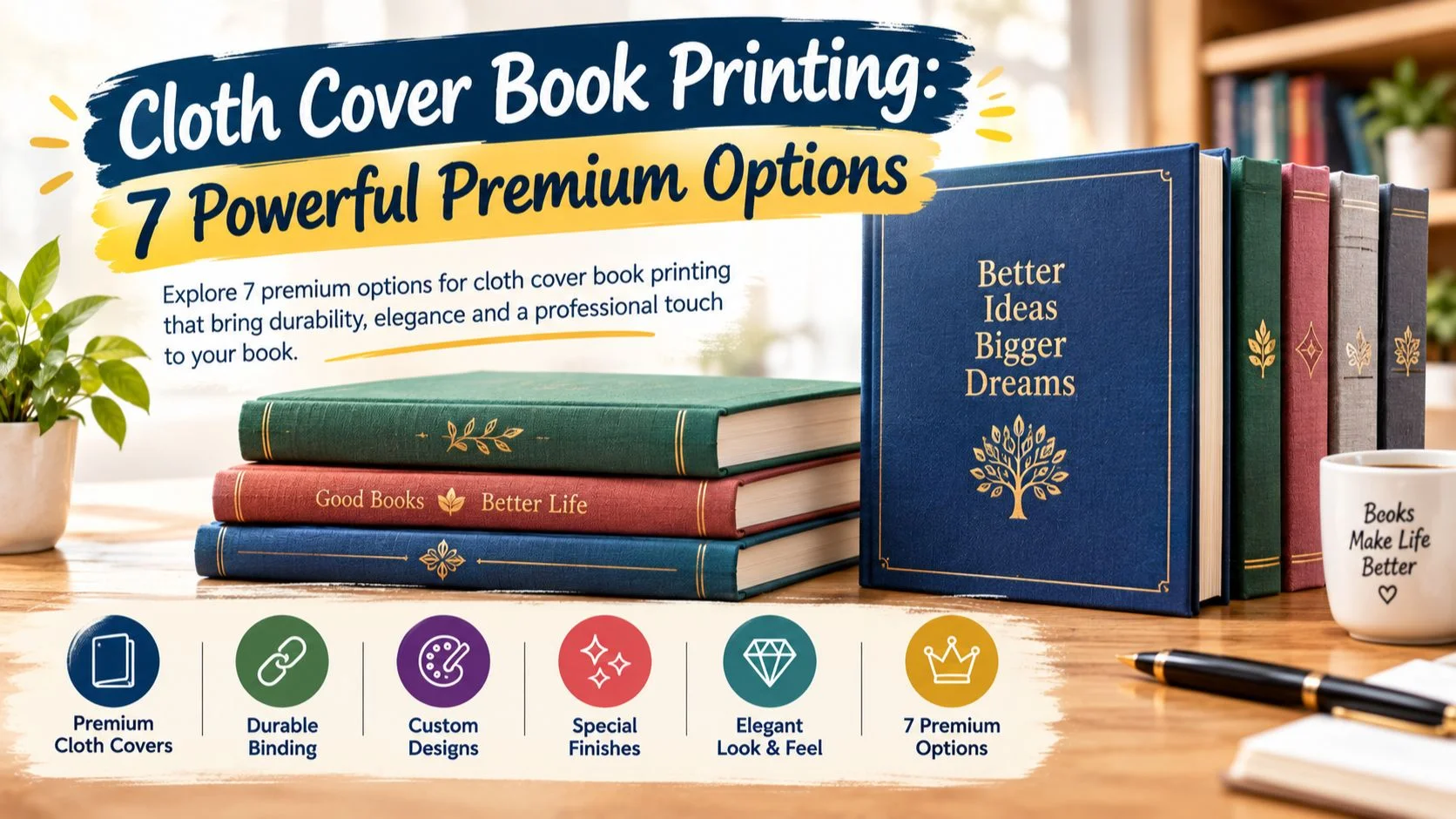
Cloth Cover Book Printing: 7 Powerful Premium Options
A beautiful book deserves a cover that feels just as special. The cover is often the first thing readers notice. It can create interest before they read the first page. It can also tell readers something about the book’s quality.
Cloth cover book printing is a popular choice for premium books. It gives a book a classic and elegant appearance. The soft fabric surface also creates a pleasant texture. This makes the finished book feel different from regular paperback books.
Many authors choose cloth for special editions and keepsake books. It can also work well for novels, memoirs, poetry, and gift books. The right material can make your book feel more valuable. However, choosing the right option requires some careful planning.
In this first part, we will explore the basics. We will also discuss the first four premium options. You will learn about materials, designs, binding, and finishing choices. These details can help you make a better printing decision.
Why Choose Cloth Cover Book Printing?
A book cover does more than protect the pages. It also creates the reader’s first impression. A strong cover can make a book feel professional and memorable.
Cloth cover book printing adds a traditional touch to modern book production. The fabric surface creates depth and character. It can also make the book more comfortable to hold.
Cloth covers are especially useful for special editions. They can make an ordinary book feel more like a keepsake. This can be useful when the book is intended as a gift.
Authors can choose from many fabric colors and textures. Some materials have a smooth surface. Others have a more visible woven texture.
The choice should always match the book’s purpose. A serious novel may suit dark and simple materials. A children’s book may need brighter colors.
The cover design should also work with the chosen fabric. Good planning helps every element work together.
Understanding Cloth Hardcover Book Printing
Hardcover books are known for their strength and professional appearance. They also provide a firm surface for premium cover materials.
Cloth hardcover book printing combines a hard cover with a fabric surface. This creates a strong and attractive finished book.
The hardcover structure can protect the pages during regular use. It can also help the book remain in good condition longer.
The fabric adds another visual and physical layer. Readers can feel the texture when holding the book.
This format works well for many types of books. It can suit fiction, memoirs, poetry, biographies, and collector editions.
Book size is an important consideration. Large books may require stronger materials. Page count can also affect the spine size.
Before production, ask your printer for exact measurements. Never guess the spine width yourself.
A professional printer can calculate the correct dimensions. They can also provide a suitable cover template.
Choosing the Right Hardcover Structure

The hardcover structure should match the book’s intended use. A frequently handled book needs strong construction.
Books intended as gifts may focus more on appearance. Collector editions may need both strength and decorative finishes.
Think about how readers will handle your book. Consider whether it will sit on shelves or travel frequently.
The cover should remain attractive while providing proper protection. A good production process balances both needs.
Ask the printer about their available hardcover options. Request samples if they are available.
Physical samples can show details that digital images cannot. You can see the fabric texture and overall construction.
Premium Option 1: Classic Fabric Finish
The first option is a simple classic fabric finish. It focuses on clean design and quality material.
This style works well for authors who prefer timeless covers. It does not require excessive decoration.
With cloth cover book printing, you can select a fabric that matches your book. Popular choices include dark, neutral, and soft shades.
The title can then be added to the fabric. Depending on the material, several finishing methods may be possible.
Simple lettering can create a sophisticated appearance. The author name can also be placed on the cover.
The spine can include the title when appropriate. This helps readers identify the book on a shelf.
The key is balance. Too many elements can make the cover look crowded.
Selecting Fabric Colors
Color plays an important role in book design. The fabric color should support your cover’s overall message.
Dark colors can create a serious and traditional appearance. Navy, black, and deep green can work well for many genres.
Lighter shades can create a softer appearance. Cream, beige, and light gray can suit literary projects.
Bright colors may work well for children’s books. They can also suit cheerful or creative subjects.
Always consider the printed elements before choosing the color. Some lettering may be difficult to see against certain fabrics.
Ask your printer for material samples. This is one of the safest ways to choose the right option.
Understanding Fabric Texture
Texture can change how a book feels in the reader’s hands. Smooth fabric creates a clean appearance.
Woven fabric can create more visual interest. It may also provide a stronger traditional look.
The texture should support the book’s genre. It should not distract from the title.
Before ordering, ask about the available materials. Find out how each material performs during production.
A professional printer can explain the advantages of each option. They can also recommend materials for your specific project.
Premium Option 2: Decorative Cloth Binding
Decorative binding adds more visual detail to the cover. It can make a special edition feel unique.
Cloth bound book printing is often associated with traditional book production. It can create a classic appearance that many readers appreciate.
Decorative details may include patterns or special lettering. Small design elements can also be added to the cover.
The design should remain easy to understand. A premium cover does not need excessive decoration.
Think about your book’s subject before selecting decorative details. A historical book may suit traditional patterns.
A poetry book may benefit from simple and elegant artwork. A children’s book can use playful elements.
The goal is to create a cover that feels connected to the book. Every decorative choice should have a purpose.
Creating a Balanced Decorative Design

A decorative cover needs good visual balance. The title should remain the main focus.
The author name should also be easy to locate. Decorative artwork should support these elements.
Avoid placing too many details around the title. Crowded designs can become difficult to read.
Consider the fabric texture when planning the artwork. Some details may not work well on heavily textured materials.
Your designer should test the design before production. A digital proof can help identify obvious problems.
For larger orders, consider requesting a physical sample. This provides a better idea of the final result.
Premium Option 3: Foil Lettering
Foil lettering is another popular premium finish. It can create a clean and elegant appearance.
Gold and silver foil are common choices. Other colors may also be available from some printers.
Foil can work especially well with cloth hardcover book printing. It can create strong contrast against darker fabrics.
The title is often the best place for foil. The author’s name can also receive the same treatment.
You do not need to use foil everywhere. A small amount can create a stronger effect.
The finish should match your book’s overall design. Simple lettering often looks more premium than excessive decoration.
Choosing Foil Colors
Gold foil can create a traditional luxury appearance. Silver can create a cleaner and more modern effect.
Other foil colors may suit specific genres. However, readability should always come first.
Choose a foil color that contrasts with your fabric. The title should remain clear from a normal viewing distance.
Ask your printer which foil options are available. Not every fabric supports every finishing method.
You should also ask about minimum lettering sizes. Very small text may not reproduce properly.
A professional printer can help you avoid these problems before production.
Premium Option 4: Embossed Cover Design
Embossing creates a raised design on the cover. Readers can feel the design when they touch the book.
This finish can create a strong premium effect. It can also work without using many colors.
Embossing is often used for titles, initials, logos, or small artwork. The best results usually come from simple designs.
With cloth cover book printing, embossing can add another layer of texture. It can make the cover feel more detailed and carefully made.
The design should be suitable for the fabric. Very complex artwork may not produce the desired result.
Ask your printer about embossing limitations. They can explain which shapes and sizes work best.
Embossing and Book Design
Embossing should support the main cover design. It should not make the title difficult to read.
A raised title can look elegant on a simple fabric background. A small decorative symbol can also work well.
Some authors combine embossing with foil. This can create an even stronger premium appearance.
However, adding multiple finishes can increase production costs. It may also require more careful preparation.
Always ask for pricing before approving the final design. Make sure the added finish fits your budget.
Preparing Your Book for Production

Good preparation can make cloth cover book printing much easier. Start by confirming the final book size.
Then confirm the page count. Your printer needs this information for accurate production.
The spine width depends on several factors. These can include paper type and page count.
Never create the spine by guessing. Use the printer’s official measurements.
You should also request the printer’s cover template. This helps you create the artwork correctly.
Check the required file format before exporting your design. Different printers may have different requirements.
Review the cover carefully before sending it. Look for spelling errors and incorrect information.
A professional proof can help catch problems early. It is always better to fix mistakes before printing.
How to Choose a Reliable Printer
Choosing the right printer is just as important as choosing the cover. Look for a company with experience in premium books.
Ask whether they offer cloth bound book printing. Request examples of their previous work.
Check the quality of their fabric and binding. Pay attention to the edges and spine.
Ask how they handle quality control. A reliable printer should have a clear production process.
You should also ask about turnaround time. Make sure the production schedule fits your publishing plans.
Compare complete quotes from different printers. Do not compare only the basic printing price.
Ask whether setup, proofing, finishing, and shipping are included. This helps you understand the real cost.
What to Check Before Approving Your Cover
Before approving production, review every part of your cover. Check the title and author name carefully.
Make sure the spine text is correct. Also check the placement of any artwork.
Review the fabric color against the design. Make sure the text has enough contrast.
Look at the printed cover at full size. Do not rely only on a small screen preview.
Check whether the design matches your book’s audience. The cover should communicate the right feeling.
If possible, request a physical sample. This can show the actual fabric and finishing quality.
Take your time during this stage. Fixing a mistake after printing can be expensive.
Premium Option 5: Personalized Cloth Bound Editions
Personalized books can create a stronger connection with readers. Cloth bound book printing works well for special editions and keepsake books.
You can add names, dates, short messages, or special artwork. These details can make a book feel more personal.
Family histories, memoirs, poetry books, and gift editions can benefit from personalization. Keep the design simple and readable.
Too many details can make the cover look crowded. Always discuss personalization options with your printer before production.
Premium Option 6: Printed Artwork and Fabric
Combining fabric with artwork can create a unique appearance. A carefully designed printed cover can work beautifully with the right fabric.
However, not every fabric supports every printing method. Always ask your printer about compatible materials.
Color can also look different on fabric. A physical sample can help you check the final appearance.
Your artwork should support the book’s subject. Avoid adding unnecessary details that make the cover difficult to read.
Premium Option 7: Custom Design and Premium Finishing

Custom fabric cover books give authors greater creative control. You can combine fabric, foil, embossing, artwork, and custom lettering.
This option works especially well for special editions. It can also suit collector books and author gifts.
However, extra finishing can increase production costs. Start by choosing the features that matter most.
A simple combination can often look more elegant. Your printer can explain which finishes work best together.
Choosing the Right Cloth
The cloth affects both appearance and texture. Some fabrics have smooth surfaces, while others have visible woven patterns.
Dark colors can create a classic appearance. Light colors can create a softer feeling.
Your fabric should also match the cover design. The title must remain easy to read against the chosen color.
Ask for physical samples whenever possible. Seeing and touching the material can make your decision easier.
Understanding Cloth Hardcover Book Printing Costs
Cloth hardcover book printing usually costs more than standard paperback production. Several factors affect the final price.
These include book size, page count, quantity, fabric, and finishing. Foil, embossing, and custom artwork can add extra costs.
Larger orders may reduce the cost per book. However, minimum order requirements can vary between printers.
Always request a complete quote before production. Ask whether setup, proofing, finishing, and shipping are included.
How to Choose a Reliable Printer
A reliable printer should have experience with premium books. Ask to see examples of previous projects.
Check the fabric, binding, edges, and spine carefully. These details can show the quality of their work.
Ask about production time and quality control. You should also ask whether physical samples are available.
Do not choose a printer based only on the lowest price. Good production quality is important for premium books.
Common Mistakes to Avoid
One common mistake is choosing fabric without considering the book’s design. The material should support the book’s overall style.
Another mistake is adding too many decorative elements. A simple design can often look more professional.
Authors should also check the spine carefully. Incorrect measurements can cause production problems.
Always proofread your printed cover before approval. Check the title, author name, artwork, and spine text.
Following the printer’s specifications can also prevent technical problems.
Cloth Cover Book Printing for Different Books
Different genres may need different cover styles. Novels can look elegant with classic fabric and simple lettering.
Memoirs can use personal colors and meaningful details. Poetry books may suit soft textures and clean typography.
Children’s books can use brighter colors and playful designs. Collector editions can benefit from foil and embossing.
Cloth cover book printing can work for many genres. The important thing is choosing features that match your readers.
Final Checklist Before Printing
Before ordering cloth cover book printing, review the complete project.
Confirm the book size, page count, and spine measurement. Check your fabric color and texture.
Review every word on the cover. Make sure the artwork is correctly positioned.
Confirm the printing and finishing methods. Ask for a proof before approving production.
If possible, request a physical sample. This can help you identify problems before printing many copies.
Final Thoughts
A premium cover can make a physical book more memorable. Cloth cover book printing provides many options for authors.
You can choose classic fabric, decorative binding, foil, embossing, or custom designs.
Cloth bound book printing creates a traditional appearance. Cloth hardcover book printing adds strength and durability.
A professional printed cover can improve your book’s visual identity. Custom fabric cover books can make special editions feel unique.
Take your time when choosing materials and finishes. Compare printers, request samples, and review your proof carefully.
With thoughtful planning, your finished book can look beautiful, professional, and worth keeping.
Frequently Asked Questions
What is cloth cover book printing?
Cloth cover book printing uses fabric over a hardcover structure. It gives books a classic, premium appearance.
Is cloth hardcover book printing durable?
Yes, hardcover construction provides good protection. Quality fabric and binding can also improve durability.
What is cloth bound book printing?
Cloth bound book printing uses fabric as the outer cover material. It is popular for premium and special editions.
Can I customize a cloth book cover?
Yes. Custom fabric cover books can include different colors, artwork, foil, and embossing.
Can I add a printed cover design?
Yes, depending on the fabric and printing method. Your printer can recommend suitable options for your design.
How much does cloth cover book printing cost?
The price depends on size, pages, quantity, fabric, and finishing. Always request a complete quote before printing.
Is cloth cover book printing good for special editions?
Yes. It is an excellent choice for collector books, gifts, memoirs, and special editions.
Should I request a sample?
Yes. A sample lets you check the cloth, color, binding, and finishing before ordering larger quantities.
What colors are available for cloth covers?
Most printers offer several fabric colors. Common choices include black, navy, cream, gray, and other shades.
Can I add foil to a cloth cover?
Yes, many printers offer foil finishing. Gold and silver foil are popular choices for premium books.

We help authors bring their stories to life through professional online book publishing services. From manuscript formatting and cover design to Amazon KDP publishing and global distribution, we make self-publishing simple, affordable, and successful.
