
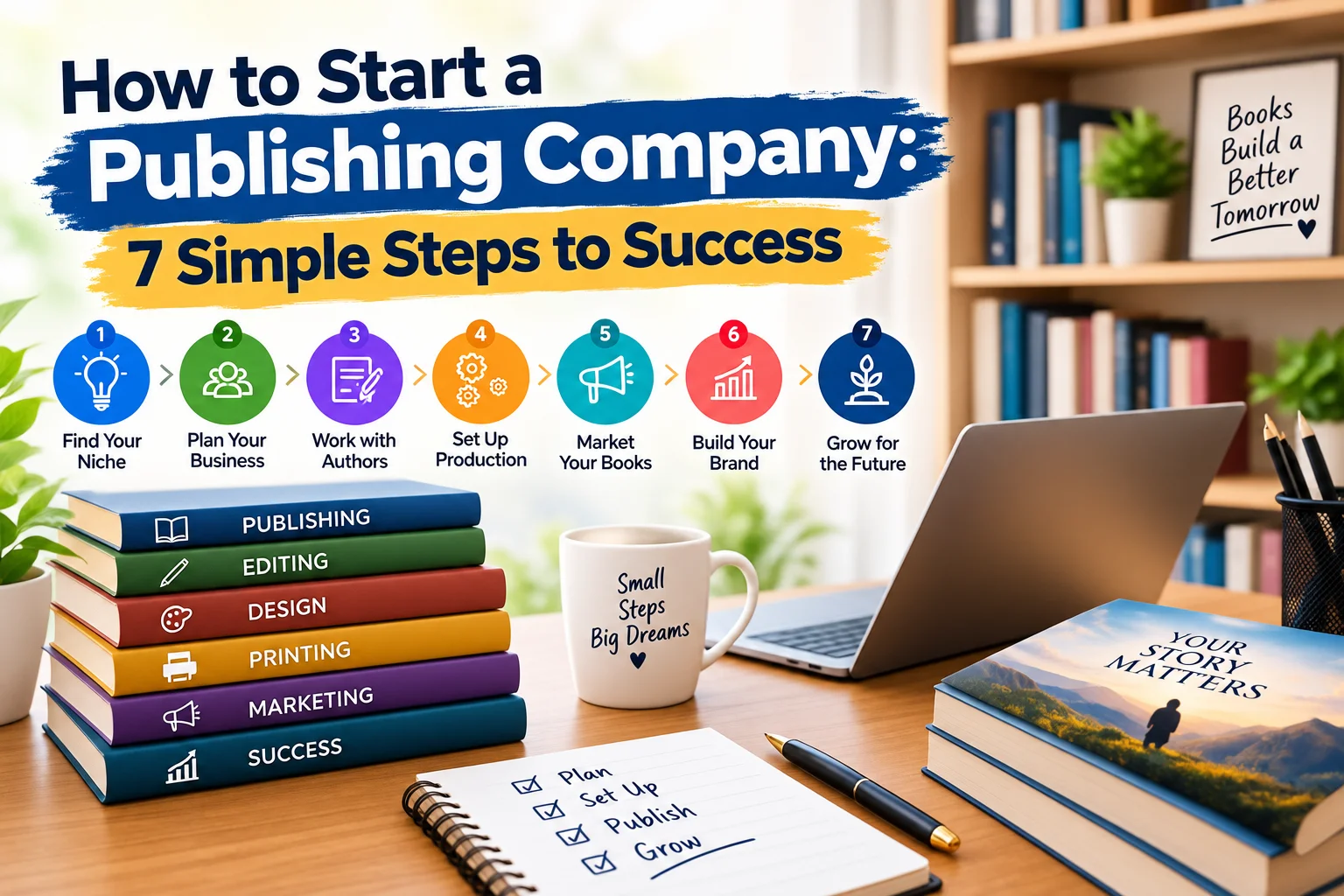
How to Start a Publishing Company: 7 Simple Steps to Success
Starting a publishing company can be an exciting business opportunity. You can help writers turn ideas into finished books. You can build a brand around stories, knowledge, and creativity. Today, small publishers can reach readers without large offices. They can also work with freelancers from different locations. Still, starting a company needs planning and patience. You need a clear niche, strong systems, and reliable people. This guide explains how to start a publishing company step by step. It covers the main decisions beginners need to make.
How to Start a Publishing Company
First, decide what your company will publish. Publishing covers many markets and book types. You could publish fiction, nonfiction, or children’s books. You could focus on education, business, or self-help. You could also specialize in poetry or specific topics. A clear niche makes your company easier to understand. It also helps you target the right authors and readers.
Research your chosen market before making major decisions. Study other publishers and their book catalogs. Look at their services, covers, and book descriptions. Read customer reviews to understand reader expectations. Look for gaps your company could serve. Your goal is not to copy competitors. Instead, learn what authors and readers need.
You should also decide who your main customer will be. Your customer could be authors, readers, or both. Service-based publishers mainly work with authors. Traditional publishers usually select and invest in manuscripts. Choose a model that matches your resources and goals.
How to Start a Publishing House
Many beginners wonder how to start a publishing house. A publishing house can actually begin quite small. You do not need a large office or huge staff. You can work from home and hire freelancers when needed.
First, choose your publishing model. Traditional publishers usually handle production costs. They may pay for editing, design, printing, and marketing. Authors normally receive royalties under their agreement.
Another option is author services publishing. Authors pay for services such as editing and design. They may also pay for formatting and distribution support. Some companies offer complete publishing packages. Others let authors choose individual services.
Whatever model you choose, explain everything clearly. Authors should understand your services and agreements. They should also understand their rights and responsibilities. Clear communication helps build trust.
Create a simple workflow for every book. Start with manuscript review and editing. Then move to cover design and formatting. Complete proofreading before final production. Finally, prepare the book for distribution.
How to Start a Book Publishing Company

If you want to know how to start a book publishing company, focus on production. A finished book requires several important steps. These include editing, design, formatting, proofreading, and publishing.
Editing may include developmental editing and copyediting. Proofreading checks the final text for smaller errors. You can hire freelance editors when starting out. Build a network of trusted professionals over time.
Cover design is also very important. A cover creates the reader’s first impression. It should match the book’s genre and audience. It should also remain clear at small sizes.
Interior formatting needs careful attention too. Margins, fonts, page numbers, and spacing all matter. Print and ebook files have different requirements. Always check current platform specifications before publishing.
You should also understand book metadata. Metadata includes the title and author name. It can also include descriptions, categories, and keywords. Accurate metadata helps books appear correctly online.
ISBNs are another important publishing topic. An ISBN identifies a particular book edition. Requirements can vary between countries and formats. Always check your local ISBN agency for current rules.
How to Start a Book Publisher
Many people search for how to start a book publisher. The first step is creating a clear publishing identity. Choose a professional name that fits your niche. Check its availability before building your brand.
Create a simple logo and consistent visual style. Your website should clearly explain your publishing services. Add a contact page and author submission information. Include examples of your work when possible.
If you have no portfolio, create professional samples. Sample covers and interior layouts can show your skills. They can also help potential authors understand your quality.
Contracts are another important part of publishing. They should explain rights, payments, deadlines, and responsibilities. Different publishing models may require different agreements. Consider professional legal advice for important contracts.
Avoid making promises you cannot control. Do not guarantee specific sales or bestseller results. Publishing results depend on many factors. Honest communication can protect your reputation.
How to Make a Publishing Company
Learning how to make a publishing company involves more than choosing a name. You need a legal and financial foundation. Requirements depend on your country and business structure.
Research your local registration requirements first. You may need business or tax registration. A qualified local professional can explain your options.
Keep business and personal finances organized. Track income, expenses, invoices, and freelancer payments. Good records make financial management easier. They can also help with future tax work.
Create a simple startup budget before spending money. List registration, website, software, and marketing costs. Add expected production expenses as well.
Do not buy every tool at the beginning. Start with tools you actually need. Add new software when your workload grows.
File management is also important. Create organized folders for every book. Keep manuscripts, covers, and interior files separate. Use clear file names and backups.
How to Start a Publishing Business

A publishing business needs a steady source of customers. Your first customers may come through referrals. Others may find you through Google or social media.
Start by defining your ideal author. Think about their genre, experience, and needs. This will help you create better marketing content.
Create articles that answer common publishing questions. You can discuss ISBNs, formatting, covers, and distribution. You can also explain print and ebook publishing.
This content can support your SEO strategy. Use your focus keyword naturally throughout the article. Add related keywords where they fit naturally. Avoid unnecessary keyword repetition.
Internal linking can also improve your website structure. Link related publishing articles together. This helps readers discover more useful information.
Social media can support your publishing brand. Share useful publishing tips and completed projects. You can also show book covers and production work.
Email marketing can help maintain relationships. Send useful information instead of constant promotions. Helpful content can build trust with potential clients.
How to Open a Publishing Company
When learning how to open a publishing company, start with essentials. You do not need every business system immediately.
You may need editing and design software. Cloud storage can help protect important files. Project management tools can organize active projects.
A professional business email is also useful. Your website should explain what you publish and who you serve. Make your author submission process easy to understand.
Create a portfolio showing your strongest work. Explain the services provided for each project. A clear portfolio can help new authors trust your company.
Avoid unrealistic production deadlines. Every book has different requirements. Editing, design, and formatting can take different amounts of time.
How to Form a Publishing Company
Once your foundation is ready, create a reliable publishing system. A standard workflow helps maintain quality.
Create a checklist for every book project. Include manuscript review, editing, design, and formatting. Add proofreading and final quality checks. Also check metadata before publication.
Quality control should never be skipped. Small mistakes can damage your publishing brand. Review every book carefully before release.
Protect your authors’ files as well. Use secure storage and regular backups. Avoid sharing private manuscripts unnecessarily.
Good organization saves time as your business grows. Authors also appreciate clear communication and reliable deadlines. These habits can lead to repeat projects and referrals.
How to Establish a Publishing Company
Establishing a publishing company takes time. You do not need dozens of books immediately. Start with a few quality projects.
Your first books can teach you valuable lessons. Track the time spent on each stage. Record unexpected costs and delays. Review author feedback after each project.
Use this information to improve your workflow. It can also help you set better prices. Over time, your publishing process should become smoother.
Build relationships with editors, designers, and formatters. You can work with freelancers instead of hiring full-time staff. Choose people based on quality and reliability.
Your reputation will grow through consistent work. A satisfied author may recommend your company. They may also return with another book.
How Much Does It Cost to Start a Publishing Company?

Many beginners ask how much does it cost to start a publishing company. There is no fixed answer for every business. Your costs depend on your location and business model. A small service-based company can start with fewer resources. A traditional publisher may need much more money. Traditional publishing can involve editing, design, printing, and marketing costs.
Your first budget should cover essential expenses. These can include business registration and website costs. Software, marketing, and professional services may also cost money. Freelancers can help reduce the need for full-time employees. Print-on-demand can also reduce inventory costs.
Create a simple budget before spending money. Separate essential costs from optional expenses. Keep some money available for unexpected costs. Review your expenses regularly as your company grows. Good financial planning can help protect your business.
How to Become a Publishing Company
Becoming a publishing company requires a clear identity. Your company should have a professional name and purpose. Decide what type of books you want to publish. Create a simple website that explains your services. Add examples of your work when possible.
You should also create a standard publishing process. Start with manuscript review and editing. Then move to cover design and formatting. Complete proofreading before preparing the final files. Finally, submit the book for distribution.
Keep your communication professional throughout the process. Give authors realistic deadlines and clear updates. Avoid promising guaranteed sales or bestseller results. Honest communication can help build long-term trust.
How to Create Publishing Company Services
Your services should solve real problems for authors. You can offer editing, proofreading, and cover design. Book formatting can also become an important service. Ebook preparation and publishing support can add value. Some authors may also need help with distribution.
You can create different service packages for different authors. Keep each package simple and easy to understand. Explain exactly what each package includes. Also explain what requires an additional fee.
Do not add too many services at the beginning. Start with services you can deliver well. You can expand your offers as your business grows. Quality should always come before quantity.
How to Market a Startup Publishing Company
Marketing helps potential authors discover your company. Start with a professional website and useful content. Write articles that answer common publishing questions. Topics can include ISBNs, book formatting, and publishing costs.
SEO can help your website gain organic traffic. Use your main keyword naturally throughout your content. Add related keywords where they make sense. Avoid repeating keywords just for search engines.
Social media can also support your publishing brand. Share publishing tips and completed projects. Show book covers and behind-the-scenes work. You can also introduce authors with their permission.
Email marketing can help you stay connected with potential clients. Send useful information instead of constant promotions. Helpful content can build trust over time.
How Can I Start My Own Publishing Company?
If you are asking how can I start my own publishing company, begin with a simple plan. Choose your niche and publishing model first. Then complete the required business setup. Create your website and brand identity. Build your publishing workflow next.
You can start with a small team of freelancers. Find reliable editors, designers, and formatters. Keep your project files organized from the beginning. Use contracts for important business relationships.
Your first goal should be quality. You do not need hundreds of books immediately. Complete a few projects properly and build your portfolio. Happy authors can later become repeat customers.
How to Find Authors for Your Publishing Company
Finding authors is important for business growth. Your website can attract authors through search engines. Create useful content that answers their publishing questions. Make your services easy to understand.
Social media can also help you connect with writers. Join relevant writing communities and participate naturally. Answer questions without constantly promoting your company. This can help people recognize your expertise.
Author referrals can become another useful source. A satisfied author may recommend your services. You can also build an email list through helpful resources. Avoid buying random email lists. Focus on permission-based communication instead.
How to Publish and Distribute Books
After producing a book, you need to reach readers. You can use online bookstores and distribution services. Print-on-demand can help reduce inventory needs. Ebook platforms can also expand your reach.
Before publishing, check all book files carefully. Review the cover, interior, and metadata. Check the title and author information. Make sure the book description is accurate.
Always check current platform requirements. Print and ebook files can have different specifications. Ordering a physical proof can also help catch mistakes. Fix problems before the final release.
How to Build a Successful Book Publishing Business

A successful book publishing business grows through consistency. Focus on quality instead of publishing too quickly. Choose books that fit your publishing niche. This can help create a recognizable brand.
Build strong relationships with authors. Communicate clearly during every project. Give realistic deadlines and meet them whenever possible. If problems occur, communicate them early.
Track your income and expenses regularly. Also track where your customers come from. Some leads may come from Google or social media. Others may come through referrals.
Use this information to improve your marketing. Keep investing in methods that bring useful leads. Review your publishing process as your company grows. Better systems can save time and reduce mistakes.
Common Mistakes New Publishing Companies Make
New publishers often make mistakes during their first year. One common mistake is trying to handle everything alone. Publishing requires several different skills. Freelancers can help fill important skill gaps.
Another mistake is accepting every project. Some books may not fit your niche. Others may have unrealistic deadlines. Review each project before accepting it.
Poor contracts can also cause problems. Put important agreements in writing. Clearly explain rights, payments, deadlines, and responsibilities.
Underpricing is another common problem. Your prices should cover your actual costs. Include freelancer payments, software, and your working time. Review your prices as your business grows.
Skipping quality checks can damage your reputation. Always review final files carefully. A small mistake can affect the reader’s experience. Quality control should be part of every project.
Seven Simple Steps to Start a Publishing Company
The entire process can be simplified into seven steps. These steps can help you create a practical roadmap.
Step 1: Choose Your Publishing Niche
Choose the type of books you want to publish. Research your readers and competing publishers. Pick a niche that fits your goals.
Step 2: Choose Your Business Model
Decide how your company will make money. You can use traditional publishing or author services. Your model should match your available resources.
Step 3: Set Up Your Business
Choose an appropriate business structure. Complete the required registration in your location. Set up your business finances and records.
Step 4: Build Your Publishing Team
Find reliable editors, designers, and formatters. You can use freelancers when starting out. Build your team as your workload increases.
Step 5: Create Your Publishing Workflow
Create a clear process for every book. Include editing, design, formatting, and proofreading. Add final quality checks before publication.
Step 6: Market Your Company
Build a professional website and publish useful content. Use SEO and social media to reach potential authors. Focus on helpful information rather than constant promotion.
Step 7: Publish, Learn, and Grow
Publish your first books carefully. Track your costs and results. Collect feedback from authors and readers. Improve your process with every project.
Final Thoughts on How to Start a Publishing Company
Learning how to start a publishing company does not need to feel overwhelming. You can begin with a small and focused plan. Choose your niche and business model carefully. Build reliable publishing systems from the beginning. Work with skilled freelancers when needed. Keep your costs under control and track your finances.
Most importantly, focus on quality and trust. Authors are trusting you with their creative work. Treat every project professionally and communicate clearly. A strong reputation can help your company grow naturally.
Whether you want to start a publishing house or a book publishing company, the basic principles remain similar. Start small, learn from every project, and improve your systems. With patience and consistent work, you can build a publishing business that serves authors and readers well.
FAQs About Starting a Publishing Company
How much does it cost to start a publishing company?
Costs vary by business model. A small company can start with a limited budget.
Can I start a publishing company from home?
Yes. You can work from home and hire freelancers for editing, design, and formatting.
Do I need publishing experience?
Experience is helpful, but it is not always required. Learning the publishing process is essential.
How do publishing companies make money?
Publishers can earn through book sales, royalties, publishing services, and related services.
How do I find authors for my company?
Use your website, SEO, social media, writing communities, referrals, and author outreach.
Can I start a publishing company alone?
Yes. You can start alone and hire freelancers as your business grows.
Sure, here are some more short FAQs you can add:
Do I need an office to start a publishing company?
No. You can start from home and work with remote professionals.
What services does a publishing company offer?
Services can include editing, proofreading, cover design, formatting, and distribution.
Do I need an ISBN for every book?
ISBN requirements depend on the country and book format. Check your local ISBN agency.
Can a publishing company publish ebooks?
Yes. Many publishers offer both ebooks and printed books.
How do I choose a publishing niche?
Research reader demand and choose a topic you understand well.
Can I use freelancers for my publishing company?
Yes. Freelancers can handle editing, design, formatting, and other tasks.
How long does it take to publish a book?
The timeline depends on editing, design, formatting, and distribution requirements.
Is publishing a profitable business?
It can be profitable, but results depend on costs, book sales, services, and marketing.

We help authors bring their stories to life through professional online book publishing services. From manuscript formatting and cover design to Amazon KDP publishing and global distribution, we make self-publishing simple, affordable, and successful.
