
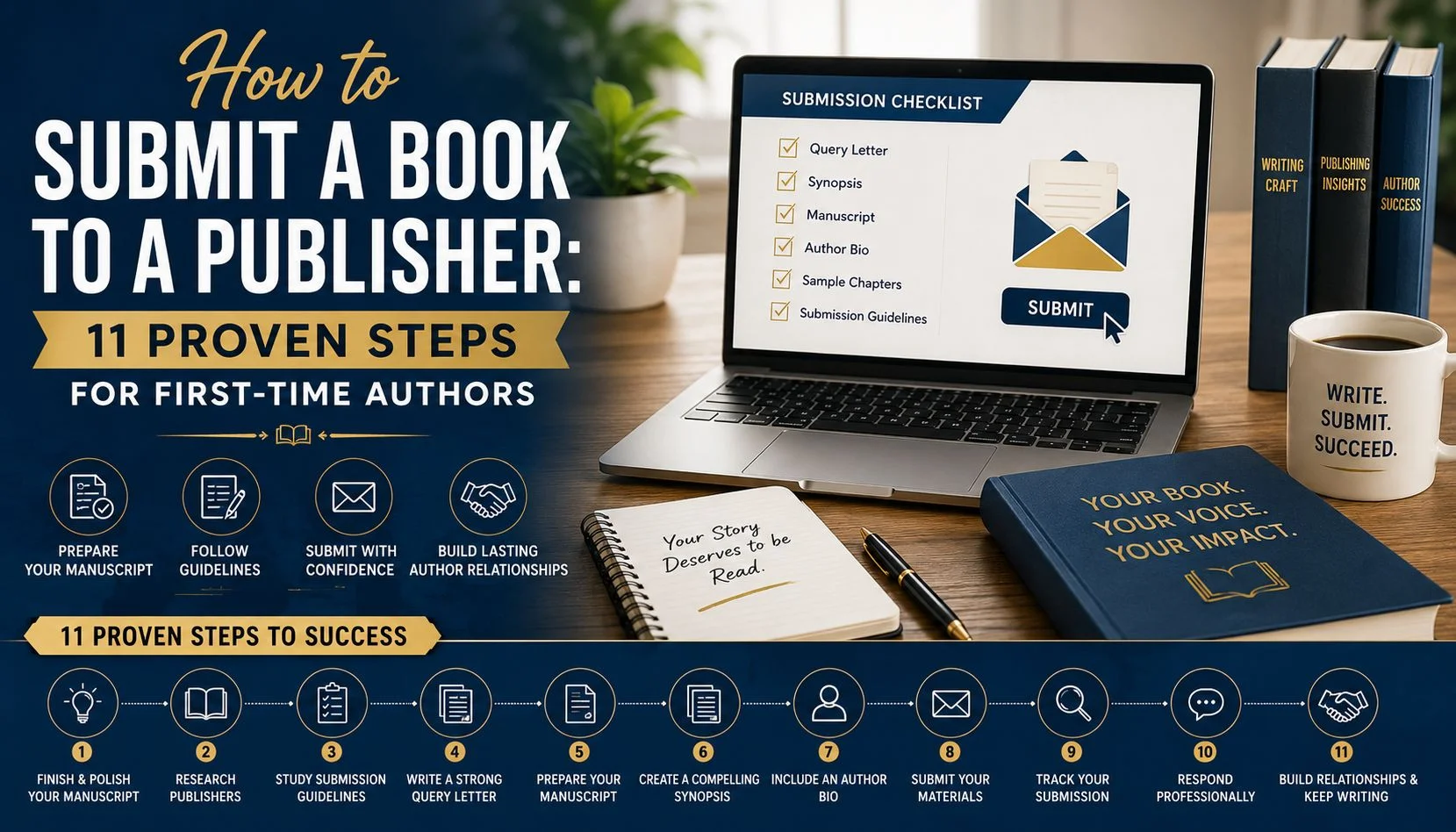
How to Submit a Book to a Publisher: 11 Proven Steps for First-Time Authors
Introduction: Understanding the Book Submission Process
Finishing a book is a huge achievement for every writer. After spending months or even years creating your story, the next challenge begins. You need to find the right way to share your work with publishers. Many new authors feel confused about the submission process. They often ask, “How do I send my book to a publisher?” or “What does a publisher need before accepting my manuscript?”
The good news is that submitting a book does not have to feel overwhelming. With the right preparation, you can approach publishers with confidence. The process requires research, patience, and attention to detail. A strong submission can help your manuscript stand out from hundreds of other books.
In this guide, we will explain how to submit a book to a publisher with simple steps. You will learn how to prepare your manuscript, find suitable publishers, create a submission package, and avoid common mistakes. Whether you are writing fiction, nonfiction, a children’s book, or a memoir, these steps will help you understand the publishing journey better.
How to Send a Book to a Publisher
Sending a book to a publisher is more than attaching a file and clicking send. Professional publishers receive thousands of submissions every year. Because of this competition, authors need to prepare carefully before contacting publishing companies.
The first step is understanding what publishers actually look for. Publishers want books that have a clear audience, strong writing quality, and market potential. A great idea is important, but the presentation of your book matters too.
Before you send your manuscript, make sure your book is complete. Avoid submitting unfinished drafts because publishers usually want polished work. Take time to edit your chapters, improve your writing style, and remove mistakes.
Many first-time authors make the mistake of contacting publishers too early. They become excited after completing the first draft and immediately start sending copies. However, a first draft is only the beginning. Professional editing and revision can make a major difference.
A publisher wants to see that you understand the industry. This includes knowing your book category, target readers, and similar successful books. When you show preparation, publishers are more likely to take your submission seriously.
Step 1: Finish and Edit Your Manuscript Before Submission
The quality of your manuscript is one of the most important parts of the publishing process. Before you contact any publisher, read your complete book several times. Look for problems with grammar, structure, characters, information, or overall flow.
Many authors hire professional editors because another person can notice issues that the writer may miss. A fresh perspective helps improve clarity and makes your manuscript more professional.
For fiction books, focus on your story structure, character development, and pacing. Readers should feel connected to the characters and interested in continuing the story.
For nonfiction books, focus on accuracy, organization, and usefulness. Your book should solve a problem or provide valuable knowledge to readers.
A polished manuscript creates a stronger first impression. Publishers are not only buying words. They are investing in a complete book project that they believe can succeed in the market.
How to Send Manuscript to Publishers

Many writers search for how to send manuscript to publishers because they are unsure about the correct process. Every publisher has different submission rules. Some accept direct submissions, while others only work through literary agents.
Before sending your manuscript, always visit the publisher’s official website. Check their submission guidelines carefully. These instructions usually explain what files they accept and what information you need to include.
Some publishers may request a complete manuscript. Others may only ask for a query letter, book proposal, sample chapters, or a synopsis.
Following instructions is extremely important. If a publisher requests three sample chapters and you send the entire book, your submission may be rejected immediately.
A professional submission shows that you respect the publisher’s time and process.
Step 2: Research the Right Publishers for Your Book
Not every publisher is suitable for every book. Finding the right match increases your chances of success.
Start by making a list of publishers that specialize in your book category. For example, a romance novel should be sent to publishers who publish romance books. A business book should target companies known for professional and educational titles.
Research these areas:
- Types of books they publish
- Their previous authors
- Their submission requirements
- Their publishing style
- Their target audience
Choosing the wrong publisher wastes time. A publisher who does not work with your genre may reject your book even if the writing is excellent.
The goal is not to send your manuscript everywhere. The goal is to send it to publishers who are already interested in books like yours.
Step 3: Prepare a Professional Query Letter
A query letter is your introduction to the publisher. It is usually the first thing they read before opening your manuscript.
A strong query letter should include:
- Your book title
- Book category
- Word count
- Short description
- Target audience
- Author background
- Why your book fits their publishing house
Keep your introduction clear and professional. Avoid writing a long personal story about how you created the book. Publishers want to quickly understand what makes your book valuable.
Your opening lines should create interest. Explain the main idea of your book and why readers will care about it.
For example, instead of saying:
“I wrote this book because I always loved writing.”
A stronger approach is:
“This book helps new entrepreneurs understand simple strategies for building a successful business.”
The second example focuses on reader value.
Step 4: Create a Strong Book Proposal
A book proposal is commonly required for nonfiction books. It helps publishers understand your book idea before reading the full manuscript.
A professional proposal usually includes:
- Book overview
- Market information
- Target readers
- Chapter outline
- Author information
- Marketing ideas
- Competitive book analysis
Publishers want to know if your book has potential in the market. A good proposal explains who will buy your book and why.
For fiction writers, publishers often focus more on the manuscript itself. However, a strong summary and author introduction can still help.
Step 5: Follow Publisher Submission Guidelines Carefully

One of the biggest mistakes new authors make is ignoring submission instructions.
Every publisher has specific requirements. Some may ask for:
- Microsoft Word manuscript
- PDF file
- Specific formatting
- Cover letter
- Synopsis
- Sample chapters
Read every instruction before submitting.
Small mistakes can create a negative impression. A publisher may assume that an author who ignores guidelines may also be difficult during the publishing process.
Professional writers treat submission guidelines as important steps, not unnecessary rules.
Step 6: Format Your Manuscript Professionally Before Sending
After preparing your manuscript, the next important step is proper formatting. Many new authors focus only on writing quality. However, presentation also creates a strong impression.
Publishers receive many manuscripts every week. A poorly formatted document can make your work look unfinished. A clean manuscript shows that you understand professional publishing standards.
Before submitting, check your manuscript format carefully. Use a simple font style and keep the layout easy to read. Most publishers prefer standard formatting because editors need a comfortable reading experience.
Your manuscript should usually include:
- A clear title page
- Author name and contact details
- Proper chapter headings
- Correct page numbers
- Consistent spacing
- Easy-to-read paragraphs
Avoid adding complicated designs, images, or colorful formatting unless the publisher requests them. The purpose of a manuscript is to show your writing, not your design skills.
A professional format allows editors to focus on your story and message. It also shows that you have taken your publishing journey seriously.
How Do I Submit a Manuscript to a Publisher?

Many writers ask, “How do I submit a manuscript to a publisher?” The answer depends on the publisher’s process. Some publishers accept direct submissions. Others require authors to work with literary agents.
The first thing you should do is check the publisher’s official submission page. Every company has different rules. Some publishers use online forms, while others accept email submissions.
When submitting your manuscript, prepare all required materials before sending anything. A complete submission package may include:
- Query letter
- Manuscript sample
- Full manuscript
- Book proposal
- Author biography
- Marketing information
A complete package makes the publisher’s job easier. It also increases your chances of receiving a serious review.
Many authors lose opportunities because they send incomplete information. They may have a great book idea, but their submission does not explain the value clearly.
Step 7: Decide If You Need a Literary Agent
A literary agent can help connect authors with traditional publishers. Agents understand the publishing market and know which publishers may be interested in specific books.
For many first-time authors, finding an agent can feel challenging. However, an experienced agent can provide valuable guidance.
Agents usually review your query letter first. If they like your idea, they may request sample chapters or the complete manuscript.
A good agent can help with:
- Improving your book proposal
- Contacting publishers
- Negotiating contracts
- Understanding publishing terms
Not every author needs an agent. Some small publishers accept direct submissions from writers. However, larger publishing houses often prefer agent representation.
Research your options and choose the path that fits your goals.
Step 8: Submit Your Manuscript to a Publishing Company
Many writers search for how to submit a manuscript to a publishing company because they want to understand the final submission process.
The process starts with finding publishers that match your book type. After creating a list, review their requirements and prepare your materials.
When sending your manuscript, write a professional email. Your message should be short and respectful.
Include important information such as:
- Your book title
- Genre
- Word count
- Submission purpose
- Attached documents
Avoid sending large files unless requested. Some publishers prefer links or specific file formats.
Remember that publishers receive many submissions. A polite and professional approach can create a positive impression.
Step 9: Be Patient After Submitting Your Book
After sending your manuscript, waiting can be difficult. Many authors expect a quick response. However, publishers often need several weeks or months to review submissions.
During this waiting period, avoid sending repeated messages. Give publishers enough time to evaluate your work.
You can continue improving your author platform while waiting. This may include:
- Building your author website
- Growing your social media presence
- Connecting with readers
- Planning marketing ideas
A strong author presence can help publishers see that you are serious about your writing career.
Publishing is not only about writing a book. It is also about building relationships with readers.
Step 10: Understand Rejections and Improve Your Approach
Receiving a rejection can feel disappointing. However, rejection is a normal part of the publishing industry.
Many successful authors received multiple rejections before finding the right publisher.
A rejection does not always mean your book is bad. Sometimes the publisher may already have similar titles. Sometimes the timing may not be right.
Use feedback whenever possible. If multiple publishers mention similar issues, consider improving those areas.
Common reasons for rejection include:
- Weak opening chapters
- Unclear target audience
- Poor manuscript preparation
- Wrong publisher choice
- Weak book proposal
Successful authors continue learning and improving.
Step 11: Review Your Publishing Contract Carefully
If a publisher accepts your manuscript, the next step is reviewing the publishing agreement.
A publishing contract explains the relationship between you and the publisher.
Important areas to understand include:
- Rights ownership
- Royalty payments
- Publishing timeline
- Marketing responsibilities
- Distribution details
Do not sign a contract without understanding the terms. If possible, ask a publishing professional or literary lawyer to review the agreement.
A good publishing partnership should benefit both the author and the publisher.
Common Mistakes Authors Make When Submitting Books

Many first-time authors make avoidable mistakes during submission. Understanding these problems can save time and effort.
One common mistake is sending the same message to every publisher. Publishers want personalized submissions. Show that you understand their publishing style.
Another mistake is ignoring editing. A strong idea needs professional presentation. Grammar problems and unclear writing can reduce your chances.
Some authors also submit to publishers who do not publish their genre. Research is always important before contacting anyone.
Avoid rushing the process. Publishing is a long journey. Quality preparation creates better opportunities.
Tips to Increase Your Chances of Publisher Acceptance
Getting accepted by a publisher requires more than a good manuscript. You also need a smart approach.
Here are some helpful tips:
Know Your Target Readers
Publishers want books that have a clear audience. Understand who will read your book and why they need it.
Build Your Author Brand
An online presence can help readers and publishers discover you. A professional website and social media profiles can support your writing career.
Keep Learning About Publishing
The publishing world changes regularly. Learn about trends, marketing, and reader expectations.
Create a Strong Book Description
A powerful description helps publishers understand your book quickly. Explain the main idea clearly and show the value.
Stay Professional
Communication matters. Be respectful in emails and follow publisher instructions carefully.
Final Thoughts: Start Your Publishing Journey With Confidence
Learning how to submit a book to a publisher is an important step for every new author. The process may seem difficult at first, but proper preparation makes everything easier.
Start by creating a polished manuscript. Research the right publishers. Prepare a professional submission package. Follow guidelines carefully and remain patient.
Remember, publishing success does not happen overnight. Many successful writers faced rejection before finding the right opportunity.
Your book deserves a professional chance. With dedication, research, and consistent improvement, you can move closer to seeing your work published.
The goal is not just to send a manuscript. The goal is to create a strong connection between your story and the readers who need it.
A helpful article should focus on readers first by providing clear, trustworthy, and useful information. Google’s guidance encourages content that demonstrates experience, expertise, authoritativeness, and trustworthiness while helping users achieve their goals.
Frequently Asked Questions (FAQs)
How do I submit a manuscript to a publisher for the first time?
Start by researching publishers that match your book genre. Prepare your manuscript, query letter, and required documents. Then follow the publisher’s official submission guidelines.
Can I send my book directly to a publisher?
Yes, some publishers accept direct submissions. However, some large publishing houses only work through literary agents.
How long does a publisher take to review a manuscript?
The review time depends on the publisher. Some respond within weeks, while others may take several months.
Should I edit my book before submitting it?
Yes. A professionally edited manuscript has a better chance of making a positive impression.
Can a first-time author get published?
Yes. Many successful authors started as beginners. A strong manuscript and professional submission can create opportunities.

We help authors bring their stories to life through professional online book publishing services. From manuscript formatting and cover design to Amazon KDP publishing and global distribution, we make self-publishing simple, affordable, and successful.
